AI Paragraph Rewriter

AI Paragraph Rewriter — hands-on reviews, top picks, pricing, pros and cons and a practical how-to guide on Aizhi.

  • VSCO

    VSCO

    VSCO ( ), formerly known as VSCO Cam, is a photography mobile app available for iOS and Android devices. The app was created by Joel Flory and Greg Lutze. The VSCO app allows users to capture photos in the app and edit them, using preset filters and editing tools. == History == Visual Supply Company was founded by Joel Flory and Greg Lutze in California, in 2011. VSCO was launched in 2012. It raised $40 million from investors in May 2014. In 2017, VSCO launched a subscription model. As of 2018, Visual Supply Company has $90 million in funding from investors and over 2 million paying members. In 2019, VSCO acquired Rylo, a video editing startup founded by the original developer of Instagram’s Hyperlapse. Visual Supply Company has locations in Oakland, California, where it is headquartered, and Chicago, Illinois. In December 2020 VSCO acquired AI-powered video editing app Trash. In April 2018, VSCO reached over 30 million users. In September 2023, Eric Wittman was appointed as the new CEO and co-founder Joel Flory became executive chairman. == Usage == Users must register an account to use the app. Photos can be taken or imported from the camera roll, as well as short videos or animated GIFs (known in the app as DSCO; iOS only). The user can edit their photos through various preset filters, or through the "toolkit" feature which allows finer adjustments to fade, clarity, skin tone, tint, sharpness, saturation, contrast, temperature, exposure, and other properties. Users have the option of posting their photos to their profile, where they can also add captions and hashtags. Photos can also be exported back into the camera roll or shared with other social networking services. The users also have an option to edit their own videos from their camera roll with the VSCO yearly membership, but they are not able to post camera roll as VSCO Film X videos to their account on VSCO. JPEG and raw image files can be used. Research on image based social media platforms has found that engagement with posting, editing, and interacting with images can influence users' mood, self esteem, and body satisfaction. Studies also suggest that greater emotional investment in social media content is associated with increased negative psychological outcomes including stress and depressive symptoms. == In popular culture == VSCO's Oakland headquarters was a key filming location for Boots Riley's 2018 film Sorry to Bother You.

    Read more →
  • Keyword extraction

    Keyword extraction

    Keyword extraction is tasked with the automatic identification of terms that best describe the subject of a document. Key phrases, key terms, key segments or just keywords are the terminology which is used for defining the terms that represent the most relevant information contained in the document. Although the terminology is different, function is the same: characterization of the topic discussed in a document. The task of keyword extraction is an important problem in text mining, information extraction, information retrieval and natural language processing (NLP). == Keyword assignment vs. extraction == Keyword assignment methods can be roughly divided into: keyword assignment (keywords are chosen from controlled vocabulary or taxonomy) and keyword extraction (keywords are chosen from words that are explicitly mentioned in original text). Methods for automatic keyword extraction can be supervised, semi-supervised, or unsupervised. Unsupervised methods can be further divided into simple statistics, linguistics or graph-based, or ensemble methods that combine some or most of these methods.

    Read more →
  • Neural field

    Neural field

    In machine learning, a neural field (also known as implicit neural representation, neural implicit, or coordinate-based neural network), is a mathematical field that is fully or partially parametrized by a neural network. Initially developed to tackle visual computing tasks, such as rendering or reconstruction (e.g., neural radiance fields), neural fields emerged as a promising strategy to deal with a wider range of problems, including surrogate modelling of partial differential equations, such as in physics-informed neural networks. Differently from traditional machine learning algorithms, such as feed-forward neural networks, convolutional neural networks, or transformers, neural fields do not work with discrete data (e.g. sequences, images, tokens), but map continuous inputs (e.g., spatial coordinates, time) to continuous outputs (i.e., scalars, vectors, etc.). This makes neural fields not only discretization independent, but also easily differentiable. Moreover, dealing with continuous data allows for a significant reduction in space complexity, which translates to a much more lightweight network. == Formulation and training == According to the universal approximation theorem, provided adequate learning, sufficient number of hidden units, and the presence of a deterministic relationship between the input and the output, a neural network can approximate any function to any degree of accuracy. Hence, in mathematical terms, given a field y = Φ ( x ) {\textstyle {\boldsymbol {y}}=\Phi ({\boldsymbol {x}})} , with x ∈ R n {\displaystyle {\boldsymbol {x}}\in \mathbb {R} ^{n}} and y ∈ R m {\displaystyle {\boldsymbol {y}}\in \mathbb {R} ^{m}} , a neural field Ψ θ {\displaystyle \Psi _{\theta }} , with parameters θ {\displaystyle {\boldsymbol {\theta }}} , is such that: Ψ θ ( x ) = y ^ ≈ y {\displaystyle \Psi _{\theta }({\boldsymbol {x}})={\hat {\boldsymbol {y}}}\approx {\boldsymbol {y}}} === Training === For supervised tasks, given N {\displaystyle N} examples in the training dataset (i.e., ( x i , y i ) ∈ D t r a i n , i = 1 , … , N {\displaystyle ({\boldsymbol {x_{i}}},{\boldsymbol {y_{i}}})\in {\mathcal {D_{train}}},i=1,\dots ,N} ), the neural field parameters can be learned by minimizing a loss function L {\displaystyle {\mathcal {L}}} (e.g., mean squared error). The parameters θ ~ {\displaystyle {\tilde {\theta }}} that satisfy the optimization problem are found as: θ ~ = argmin θ 1 N ∑ ( x i , y i ) ∈ D t r a i n L ( Ψ θ ( x i ) , y i ) {\displaystyle {\tilde {\boldsymbol {\theta }}}={\underset {\boldsymbol {\theta }}{\text{argmin}}}\;{\frac {1}{N}}\sum _{({\boldsymbol {x_{i}}},{\boldsymbol {y_{i}}})\in {\mathcal {D_{train}}}}{\mathcal {L}}(\Psi _{\theta }({\boldsymbol {x}}_{i}),{\boldsymbol {y}}_{i})} Notably, it is not necessary to know the analytical expression of Φ {\displaystyle \Phi } , for the previously reported training procedure only requires input-output pairs. Indeed, a neural field is able to offer a continuous and differentiable surrogate of the true field, even from purely experimental data. Moreover, neural fields can be used in unsupervised settings, with training objectives that depend on the specific task. For example, physics-informed neural networks may be trained on just the residual. === Spectral bias === As for any artificial neural network, neural fields may be characterized by a spectral bias (i.e., the tendency to preferably learn the low frequency content of a field), possibly leading to a poor representation of the ground truth. In order to overcome this limitation, several strategies have been developed. For example, SIREN uses sinusoidal activations, while the Fourier-features approach embeds the input through sines and cosines. == Conditional neural fields == In many real-world cases, however, learning a single field is not enough. For example, when reconstructing 3D vehicle shapes from Lidar data, it is desirable to have a machine learning model that can work with arbitrary shapes (e.g., a car, a bicycle, a truck, etc.). The solution is to include additional parameters, the latent variables (or latent code) z ∈ R d {\displaystyle {\boldsymbol {z}}\in \mathbb {R} ^{d}} , to vary the field and adapt it to diverse tasks. === Latent code production === When dealing with conditional neural fields, the first design choice is represented by the way in which the latent code is produced. Specifically, two main strategies can be identified: Encoder: the latent code is the output of a second neural network, acting as an encoder. During training, the loss function is the objective used to learn the parameters of both the neural field and the encoder. Auto-decoding: each training example has its own latent code, jointly trained with the neural field parameters. When the model has to process new examples (i.e., not originally present in the training dataset), a small optimization problem is solved, keeping the network parameters fixed and only learning the new latent variables. Since the latter strategy requires additional optimization steps at inference time, it sacrifices speed, but keeps the overall model smaller. Moreover, despite being simpler to implement, an encoder may harm the generalization capabilities of the model. For example, when dealing with a physical scalar field f : R 2 → R {\displaystyle f:\mathbb {R} ^{2}\rightarrow \mathbb {R} } (e.g., the pressure of a 2D fluid), an auto-decoder-based conditional neural field can map a single point to the corresponding value of the field, following a learned latent code z {\displaystyle {\boldsymbol {z}}} . However, if the latent variables were produced by an encoder, it would require access to the entire set of points and corresponding values (e.g. as a regular grid or a mesh graph), leading to a less robust model. === Global and local conditioning === In a neural field with global conditioning, the latent code does not depend on the input and, hence, it offers a global representation (e.g., the overall shape of a vehicle). However, depending on the task, it may be more useful to divide the domain of x {\displaystyle {\boldsymbol {x}}} in several subdomains, and learn different latent codes for each of them (e.g., splitting a large and complex scene in sub-scenes for a more efficient rendering). This is called local conditioning. === Conditioning strategies === There are several strategies to include the conditioning information in the neural field. In the general mathematical framework, conditioning the neural field with the latent variables is equivalent to mapping them to a subset θ ∗ {\displaystyle {\boldsymbol {\theta }}^{}} of the neural field parameters: θ ∗ = Γ ( z ) {\displaystyle {\boldsymbol {\theta }}^{}=\Gamma ({\boldsymbol {z}})} In practice, notable strategies are: Concatenation: the neural field receives, as input, the concatenation of the original input x {\displaystyle {\boldsymbol {x}}} with the latent codes z {\displaystyle {\boldsymbol {z}}} . For feed-forward neural networks, this is equivalent to setting θ ∗ {\displaystyle {\boldsymbol {\theta }}^{}} as the bias of the first layer and Γ ( z ) {\displaystyle \Gamma ({\boldsymbol {z}})} as an affine transformation. Hypernetworks: a hypernetwork is a neural network that outputs the parameters of another neural network. Specifically, it consists of approximating Γ ( z ) {\displaystyle \Gamma ({\boldsymbol {z}})} with a neural network Γ ^ γ ( z ) {\displaystyle {\hat {\Gamma }}_{\gamma }({\boldsymbol {z}})} , where γ {\displaystyle {\boldsymbol {\gamma }}} are the trainable parameters of the hypernetwork. This approach is the most general, as it allows to learn the optimal mapping from latent codes to neural field parameters. However, hypernetworks are associated to larger computational and memory complexity, due to the large number of trainable parameters. Hence, leaner approaches have been developed. For example, in the Feature-wise Linear Modulation (FiLM), the hypernetwork only produces scale and bias coefficients for the neural field layers. === Meta-learning === Instead of relying on the latent code to adapt the neural field to a specific task, it is also possible to exploit gradient-based meta-learning. In this case, the neural field is seen as the specialization of an underlying meta-neural-field, whose parameters are modified to fit the specific task, through a few steps of gradient descent. An extension of this meta-learning framework is the CAVIA algorithm, that splits the trainable parameters in context-specific and shared groups, improving parallelization and interpretability, while reducing meta-overfitting. This strategy is similar to the auto-decoding conditional neural field, but the training procedure is substantially different. == Applications == Thanks to the possibility of efficiently modelling diverse mathematical fields with neural networks, neural fields have been applied to a wide range of problems: 3D scene reconstruction: neural fields can be used to model t

    Read more →
  • Text-to-video model

    Text-to-video model

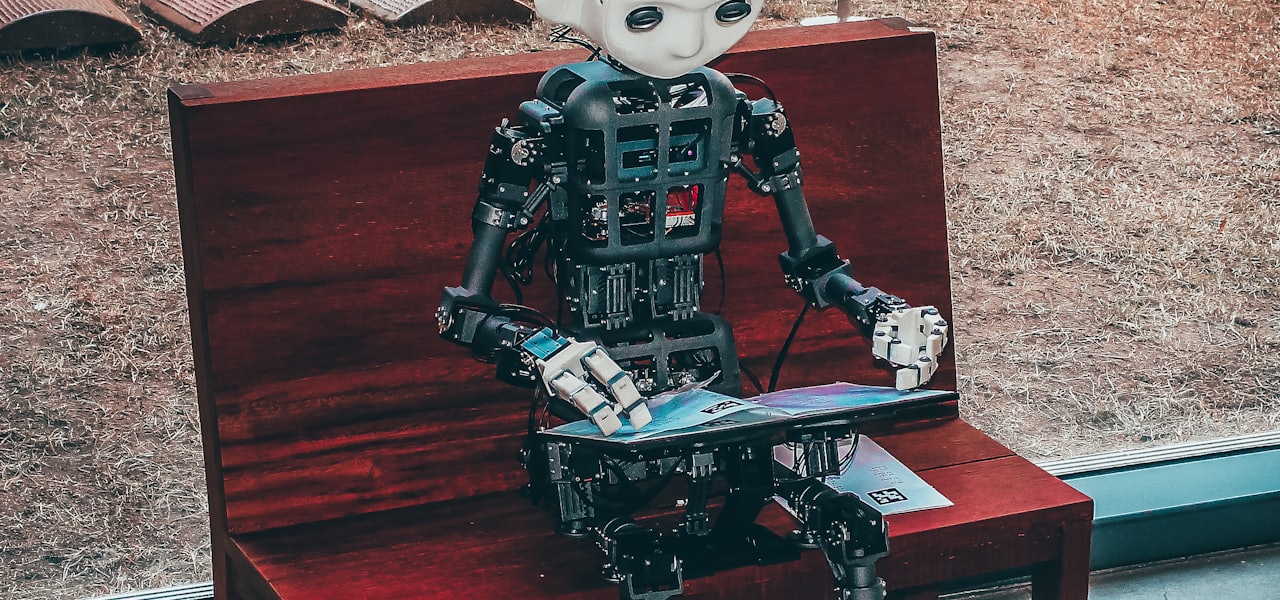
    A text-to-video model is a form of generative artificial intelligence that uses a natural language description as input to produce a video relevant to the input text. Advancements during the 2020s in the generation of high-quality, text-conditioned videos have largely been driven by the development of video diffusion models. == Models == There are different models, including open source models. Chinese-language input CogVideo is the earliest text-to-video model "of 9.4 billion parameters" to be developed, with its demo version of open source codes first presented on GitHub in 2022. That year, Meta Platforms released a partial text-to-video model called "Make-A-Video", and Google's Brain (later Google DeepMind) introduced Imagen Video, a text-to-video model with 3D U-Net. === 2023 === In February 2023, Runway released Gen-1 and Gen-2, among the first commercially available text-to-video and video-to-video models accessible to the public through a web interface. Gen-1, initially released as a video-to-video model, allowed users to transform existing video footage using text or image prompts. Gen-2, introduced in March 2023 and made publicly available in June 2023, added text-to-video capabilities, enabling users to generate videos from text prompts alone. In March 2023, a research paper titled "VideoFusion: Decomposed Diffusion Models for High-Quality Video Generation" was published, presenting a novel approach to video generation. The VideoFusion model decomposes the diffusion process into two components: base noise and residual noise, which are shared across frames to ensure temporal coherence. By utilizing a pre-trained image diffusion model as a base generator, the model efficiently generated high-quality and coherent videos. Fine-tuning the pre-trained model on video data addressed the domain gap between image and video data, enhancing the model's ability to produce realistic and consistent video sequences. In the same month, Adobe introduced Firefly AI as part of its features. === 2024 === In January 2024, Google announced development of a text-to-video model named Lumiere which is anticipated to integrate advanced video editing capabilities. Matthias Niessner and Lourdes Agapito at AI company Synthesia work on developing 3D neural rendering techniques that can synthesise realistic video by using 2D and 3D neural representations of shape, appearances, and motion for controllable video synthesis of avatars. In June 2024, Luma Labs launched its Dream Machine video tool. That same month, Kuaishou extended its Kling AI text-to-video model to international users. In July 2024, TikTok owner ByteDance released Jimeng AI in China, through its subsidiary, Faceu Technology. By September 2024, the Chinese AI company MiniMax debuted its video-01 model, joining other established AI model companies like Zhipu AI, Baichuan, and Moonshot AI, which contribute to China's involvement in AI technology. In December 2024 Lightricks launched LTX Video as an open source model. === 2025 === Alternative approaches to text-to-video models include Google's Phenaki, Hour One, Colossyan, Runway's Gen-3 Alpha, and OpenAI's Sora, Several additional text-to-video models, such as Plug-and-Play, Text2LIVE, and TuneAVideo, have emerged. FLUX.1 developer Black Forest Labs has announced its text-to-video model SOTA. Google was preparing to launch a video generation tool named Veo for YouTube Shorts in 2025. In May 2025, Google launched the Veo 3 iteration of the model. It was noted for its impressive audio generation capabilities, which were a previous limitation for text-to-video models. In July 2025 Lightricks released an update to LTX Video capable of generating clips reaching 60 seconds, and in October 2025 it released LTX-2, with audio capabilities built in. === 2026 === In February 2026, ByteDance released Seedance 2.0, it was noted for its impressive realistic generation, motion and camera control and 15 second generation, however the model faced huge critiscism from Motion Picture Association for copyright infringement. After viewing a viral clip of a fight between actors Brad Pitt and Tom Cruise, Rhett Reese, who is the co-writer of Deadpool & Wolverine and Zombieland announced that on social media "I hate to say it. It’s likely over for us," further stating that "In next to no time, one person is going to be able to sit at a computer and create a movie indistinguishable from what Hollywood now releases." == Architecture and training == There are several architectures that have been used to create text-to-video models. Similar to text-to-image models, these models can be trained using Recurrent Neural Networks (RNNs) such as long short-term memory (LSTM) networks, which has been used for Pixel Transformation Models and Stochastic Video Generation Models, which aid in consistency and realism respectively. An alternative for these include transformer models. Generative adversarial networks (GANs), Variational autoencoders (VAEs), — which can aid in the prediction of human motion — and diffusion models have also been used to develop the image generation aspects of the model. Text-video datasets used to train models include, but are not limited to, WebVid-10M, HDVILA-100M, CCV, ActivityNet, and Panda-70M. These datasets contain millions of original videos of interest, generated videos, captioned-videos, and textual information that help train models for accuracy. Text-video datasets used to train models include, but are not limited to PromptSource, DiffusionDB, and VidProM. These datasets provide the range of text inputs needed to teach models how to interpret a variety of textual prompts. The video generation process involves synchronizing the text inputs with video frames, ensuring alignment and consistency throughout the sequence. This predictive process is subject to decline in quality as the length of the video increases due to resource limitations. The Will Smith Eating Spaghetti test is a benchmark for models. == Limitations == Despite the rapid evolution of text-to-video models in their performance, a primary limitation is that they are very computationally heavy which limits its capacity to provide high quality and lengthy outputs. Additionally, these models require a large amount of specific training data to be able to generate high quality and coherent outputs, which brings about the issue of accessibility. Moreover, models may misinterpret textual prompts, resulting in video outputs that deviate from the intended meaning. This can occur due to limitations in capturing semantic context embedded in text, which affects the model's ability to align generated video with the user's intended message. Various models, including Make-A-Video, Imagen Video, Phenaki, CogVideo, GODIVA, and NUWA, are currently being tested and refined to enhance their alignment capabilities and overall performance in text-to-video generation. Another issue with the outputs is that text or fine details in AI-generated videos often appear garbled, a problem that stable diffusion models also struggle with. Examples include distorted hands and unreadable text. == Ethics == The deployment of text-to-video models raises ethical considerations related to content generation. These models have the potential to create inappropriate or unauthorized content, including explicit material, graphic violence, misinformation, and likenesses of real individuals without consent. Ensuring that AI-generated content complies with established standards for safe and ethical usage is essential, as content generated by these models may not always be easily identified as harmful or misleading. The ability of AI to recognize and filter out NSFW or copyrighted content remains an ongoing challenge, with implications for both creators and audiences. == Impacts and applications == Text-to-video models offer a broad range of applications that may benefit various fields, from educational and promotional to creative industries. These models can streamline content creation for training videos, movie previews, gaming assets, and visualizations, making it easier to generate content. During the Russo-Ukrainian war, fake videos made with artificial intelligence were created as part of a propaganda war against Ukraine and shared in social media. These included depictions of children in the Ukrainian Armed Forces, fake ads targeting children encouraging them to denounce critics of the Ukrainian government, or fictitious statements by Ukrainian President Volodymyr Zelenskyy about the country's surrender, among others. === Movies === Kaur vs Kore is the first Indian feature film made using generative AI which features dual role for the AI character of Sunny Leone, set to release in 2026. Chiranjeevi Hanuman – The Eternal is an Indian movie made entirely using Generative AI created by Vijay Subramaniam which is set for theatrical release in 2026. The movie was widely criticised by the Film makers in the Bollywood industr

    Read more →
  • Gonioreflectometer

    Gonioreflectometer

    A gonioreflectometer is a device for measuring a bidirectional reflectance distribution function (BRDF). The device consists of a light source illuminating the material to be measured and a sensor that captures light reflected from that material. The light source should be able to illuminate and the sensor should be able to capture data from a hemisphere around the target. The hemispherical rotation dimensions of the sensor and light source are the four dimensions of the BRDF. The 'gonio' part of the word refers to the device's ability to measure at different angles. Several similar devices have been built and used to capture data for similar functions. Most of these devices use a camera instead of the light intensity-measuring sensor to capture a two-dimensional sample of the target. Examples include: a spatial gonioreflectometer for capturing the SBRDF (McAllister, 2002). a camera gantry for capturing the light field (Levoy and Hanrahan, 1996). an unnamed device for capturing the bidirectional texture function (Dana et al., 1999).

    Read more →
  • Spell checker

    Spell checker

    In software, a spell checker (or spelling checker or spell check) is a software feature that checks for misspellings in a text. Spell-checking features are often embedded in software or services, such as a word processor, email client, electronic dictionary, or search engine. == Design == A basic spell checker carries out the following processes: It scans the text and extracts the words contained in it. It then compares each word with a known list of correctly spelled words (i.e. a dictionary). This might contain just a list of words, or it might also contain additional information, such as hyphenation points or lexical and grammatical attributes. An additional step is a language-dependent algorithm for handling morphology. Even for a lightly inflected language like English, the spell checker will need to consider different forms of the same word, such as plurals, verbal forms, contractions, and possessives. For many other languages, such as those featuring agglutination and more complex declension and conjugation, this part of the process is more complicated. It is unclear whether morphological analysis—allowing for many forms of a word depending on its grammatical role—provides a significant benefit for English, though its benefits for highly synthetic languages such as German, Hungarian, or Turkish are clear. As an adjunct to these components, the program's user interface allows users to approve or reject replacements and modify the program's operation. Spell checkers can use approximate string matching algorithms such as Levenshtein distance to find correct spellings of misspelled words. An alternative type of spell checker uses solely statistical information, such as n-grams, to recognize errors instead of correctly-spelled words. This approach usually requires a lot of effort to obtain sufficient statistical information. Key advantages include needing less runtime storage and the ability to correct errors in words that are not included in a dictionary. In some cases, spell checkers use a fixed list of misspellings and suggestions for those misspellings; this less flexible approach is often used in paper-based correction methods, such as the see also entries of encyclopedias. Clustering algorithms have also been used for spell checking combined with phonetic information. == History == === Pre-PC === In 1961, Les Earnest, who headed the research on this budding technology, saw it necessary to include the first spell checker that accessed a list of 10,000 acceptable words. Ralph Gorin, a graduate student under Earnest at the time, created the first true spelling checker program written as an applications program (rather than research) for general English text: SPELL for the DEC PDP-10 at Stanford University's Artificial Intelligence Laboratory, in February 1971. Gorin wrote SPELL in assembly language, for faster action; he made the first spelling corrector by searching the word list for plausible correct spellings that differ by a single letter or adjacent letter transpositions and presenting them to the user. Gorin made SPELL publicly accessible, as was done with most SAIL (Stanford Artificial Intelligence Laboratory) programs, and it soon spread around the world via the new ARPAnet, about ten years before personal computers came into general use. SPELL, its algorithms and data structures inspired the Unix ispell program. The first spell checkers were widely available on mainframe computers in the late 1970s. A group of six linguists from Georgetown University developed the first spell-check system for the IBM corporation. Henry Kučera invented one for the VAX machines of Digital Equipment Corp in 1981. === Unix === The International Ispell program commonly used in Unix is based on R. E. Gorin's SPELL. It was converted to C by Pace Willisson at MIT. The GNU project has its spell checker GNU Aspell. Aspell's main improvement is that it can more accurately suggest correct alternatives for misspelled English words. Due to the inability of traditional spell checkers to check words in complex inflected languages, Hungarian László Németh developed Hunspell, a spell checker that supports agglutinative languages and complex compound words. Hunspell also uses Unicode in its dictionaries. Hunspell replaced the previous MySpell in OpenOffice.org in version 2.0.2. Enchant is another general spell checker, derived from AbiWord. Its goal is to combine programs supporting different languages such as Aspell, Hunspell, Nuspell, Hspell (Hebrew), Voikko (Finnish), Zemberek (Turkish) and AppleSpell under one interface. === PCs === The first spell checkers for personal computers appeared in 1980, such as "WordCheck" for Commodore systems which was released in late 1980 in time for advertisements to go to print in January 1981. Developers such as Maria Mariani and Random House rushed OEM packages or end-user products into the rapidly expanding software market. On the pre-Windows PCs, these spell checkers were standalone programs, many of which could be run in terminate-and-stay-resident mode from within word-processing packages on PCs with sufficient memory. However, the market for standalone packages was short-lived, as by the mid-1980s developers of popular word-processing packages like WordStar and WordPerfect had incorporated spell checkers in their packages, mostly licensed from the above companies, who quickly expanded support from just English to many European and eventually even Asian languages. However, this required increasing sophistication in the morphology routines of the software, particularly with regard to heavily-agglutinative languages like Hungarian and Finnish. Although the size of the word-processing market in a country like Iceland might not have justified the investment of implementing a spell checker, companies like WordPerfect nonetheless strove to localize their software for as many national markets as possible as part of their global marketing strategy. When Apple developed "a system-wide spelling checker" for Mac OS X so that "the operating system took over spelling fixes," it was a first: one "didn't have to maintain a separate spelling checker for each" program. Mac OS X's spellcheck coverage includes virtually all bundled and third party applications. Visual Tools' VT Speller, introduced in 1994, was "designed for developers of applications that support Windows." It came with a dictionary but had the ability to build and incorporate use of secondary dictionaries. === Browsers === Web browsers such as Firefox and Google Chrome offer spell checking support, using Hunspell. Prior to using Hunspell, Firefox and Chrome used MySpell and GNU Aspell, respectively. === Specialties === Some spell checkers have separate support for medical dictionaries to help prevent medical errors. == Functionality == The first spell checkers were "verifiers" instead of "correctors." They offered no suggestions for incorrectly spelled words. This was helpful for typos but it was not so helpful for logical or phonetic errors. The challenge the developers faced was the difficulty in offering useful suggestions for misspelled words. This requires reducing words to a skeletal form and applying pattern-matching algorithms. It might seem logical that where spell-checking dictionaries are concerned, "the bigger, the better," so that correct words are not marked as incorrect. In practice, however, an optimal size for English appears to be around 90,000 entries. If there are more than this, incorrectly spelled words may be skipped because they are mistaken for others. For example, a linguist might determine on the basis of corpus linguistics that the word baht is more frequently a misspelling of bath or bat than a reference to the Thai currency. Hence, it would typically be more useful if a few people who write about Thai currency were slightly inconvenienced than if the spelling errors of the many more people who discuss baths were overlooked. The first MS-DOS spell checkers were mostly used in proofing mode from within word processing packages. After preparing a document, a user scanned the text looking for misspellings. Later, however, batch processing was offered in such packages as Oracle's short-lived CoAuthor and allowed a user to view the results after a document was processed and correct only the words that were known to be wrong. When memory and processing power became abundant, spell checking was performed in the background in an interactive way, such as has been the case with the Sector Software produced Spellbound program released in 1987 and Microsoft Word since Word 95. Spell checkers became increasingly sophisticated; now capable of recognizing grammatical errors. However, even at their best, they rarely catch all the errors in a text (such as homophone errors) and will flag neologisms and foreign words as misspellings. Nonetheless, spell checkers can be considered as a type of foreign language writing aid that non-native language lea

    Read more →
  • Egocentric vision

    Egocentric vision

    Egocentric vision or first-person vision is a sub-field of computer vision that entails analyzing images and videos captured by a wearable camera, which is typically worn on the head or on the chest and naturally approximates the visual field of the camera wearer. Consequently, visual data capture the part of the scene on which the user focuses to carry out the task at hand and offer a valuable perspective to understand the user's activities and their context in a naturalistic setting. The wearable camera looking forwards is often supplemented with a camera looking inward at the user's eye and able to measure a user's eye gaze, which is useful to reveal attention and to better understand the user's activity and intentions. == History == The idea of using a wearable camera to gather visual data from a first-person perspective dates back to the 70s, when Steve Mann invented "Digital Eye Glass", a device that, when worn, causes the human eye itself to effectively become both an electronic camera and a television display. Subsequently, wearable cameras were used for health-related applications in the context of Humanistic Intelligence and Wearable AI. Egocentric vision is best done from the point-of-eye, but may also be done by way of a neck-worn camera when eyeglasses would be in-the-way. This neck-worn variant was popularized by way of the Microsoft SenseCam in 2006 for experimental health research works. The interest of the computer vision community into the egocentric paradigm has been arising slowly entering the 2010s and it is rapidly growing in recent years, boosted by both the impressive advances in the field of wearable technology and by the increasing number of potential applications. The prototypical first-person vision system described by Kanade and Hebert, in 2012 is composed by three basic components: a localization component able to estimate the surrounding, a recognition component able to identify object and people, and an activity recognition component, able to provide information about the current activity of the user. Together, these three components provide a complete situational awareness of the user, which in turn can be used to provide assistance to the user or to the caregiver. Following this idea, the first computational techniques for egocentric analysis focused on hand-related activity recognition and social interaction analysis. Also, given the unconstrained nature of the video and the huge amount of data generated, temporal segmentation and summarization were among the first problems addressed. After almost ten years of egocentric vision (2007–2017), the field is still undergoing diversification. Emerging research topics include: Social saliency estimation Multi-agent egocentric vision systems Privacy preserving techniques and applications Attention-based activity analysis Social interaction analysis Hand pose analysis Ego graphical User Interfaces (EUI) Understanding social dynamics and attention Revisiting robotic vision and machine vision as egocentric sensing Activity forecasting Gaze prediction == Technical challenges == Today's wearable cameras are small and lightweight digital recording devices that can acquire images and videos automatically, without the user intervention, with different resolutions and frame rates, and from a first-person point of view. Therefore, wearable cameras are naturally primed to gather visual information from our everyday interactions since they offer an intimate perspective of the visual field of the camera wearer. Depending on the frame rate, it is common to distinguish between photo-cameras (also called lifelogging cameras) and video-cameras. The former (e.g., Narrative Clip and Microsoft SenseCam), are commonly worn on the chest, and are characterized by a very low frame rate (up to 2fpm) that allows to capture images over a long period of time without the need of recharging the battery. Consequently, they offer considerable potential for inferring knowledge about e.g. behaviour patterns, habits or lifestyle of the user. However, due to the low frame-rate and the free motion of the camera, temporally adjacent images typically present abrupt appearance changes so that motion features cannot be reliably estimated. The latter (e.g., Google Glass, GoPro), are commonly mounted on the head, and capture conventional video (around 35fps) that allows to capture fine temporal details of interactions. Consequently, they offer potential for in-depth analysis of daily or special activities. However, since the camera is moving with the wearer head, it becomes more difficult to estimate the global motion of the wearer and in the case of abrupt movements, the images can result blurred. In both cases, since the camera is worn in a naturalistic setting, visual data present a huge variability in terms of illumination conditions and object appearance. Moreover, the camera wearer is not visible in the image and what he/she is doing has to be inferred from the information in the visual field of the camera, implying that important information about the wearer, such for instance as pose or facial expression estimation, is not available. == Applications == A collection of studies published in a special theme issue of the American Journal of Preventive Medicine has demonstrated the potential of lifelogs captured through wearable cameras from a number of viewpoints. In particular, it has been shown that used as a tool for understanding and tracking lifestyle behaviour, lifelogs would enable the prevention of noncommunicable diseases associated to unhealthy trends and risky profiles (such as obesity and depression). In addition, used as a tool of re-memory cognitive training, lifelogs would enable the prevention of cognitive and functional decline in elderly people. More recently, egocentric cameras have been used to study human and animal cognition, human-human social interaction, human-robot interaction, human expertise in complex tasks. Other applications include navigation/assistive technologies for the blind, monitoring and assistance of industrial workflows, and augmented reality interfaces.

    Read more →
  • IT operations analytics

    IT operations analytics

    In the fields of information technology (IT) and systems management, IT operations analytics (ITOA) is an approach or method to retrieve, analyze, and report data for IT operations. ITOA may apply big data analytics to large datasets to produce business insights. In 2014, Gartner predicted its use might increase revenue or reduce costs. By 2017, it predicted that 15% of enterprises will use IT operations analytics technologies. == Definition == IT operations analytics (ITOA) (also known as advanced operational analytics, or IT data analytics) technologies are primarily used to discover complex patterns in high volumes of often "noisy" IT system availability and performance data. Forrester Research defined IT analytics as "The use of mathematical algorithms and other innovations to extract meaningful information from the sea of raw data collected by management and monitoring technologies." Note, ITOA is different than AIOps, which focuses on applying artificial intelligence and machine learning to the applications of ITOA. == History == Operations research as a discipline emerged from the Second World War to improve military efficiency and decision-making on the battlefield. However, only with the emergence of machine learning tech in the early 2000s could an artificially intelligent operational analytics platform actually begin to engage in the high-level pattern recognition that could adequately serve business needs. A critical catalyst towards ITOA development was the rise of Google, which pioneered a predictive analytics model that represented the first attempt to read into patterns of human behavior on the Internet. IT specialists then applied predictive analytics to the IT Industry, coming forward with platforms that can sift through data to generate insights without the need for human intervention. Due to the mainstream embrace of cloud computing and the increasing desire for businesses to adopt more big data practices, the ITOA industry has grown significantly since 2010. A 2016 ExtraHop survey of large and mid-size corporations indicates that 65 percent of the businesses surveyed will seek to integrate their data silos either this year or the next. The current goals of ITOA platforms are to improve the accuracy of their APM services, facilitate better integration with the data, and to enhance their predictive analytics capabilities. == Applications == ITOA systems tend to be used by IT operations teams, and Gartner describes seven applications of ITOA systems: Root cause analysis: The models, structures and pattern descriptions of IT infrastructure or application stack being monitored can help users pinpoint fine-grained and previously unknown root causes of overall system behavior pathologies. Proactive control of service performance and availability: Predicts future system states and the impact of those states on performance. Problem assignment: Determines how problems may be resolved or, at least, direct the results of inferences to the most appropriate individuals, or communities in the enterprise for problem resolution. Service impact analysis: When multiple root causes are known, the analytics system's output is used to determine and rank the relative impact, so that resources can be devoted to correcting the fault in the most timely and cost-effective way possible. Complement best-of-breed technology: The models, structures and pattern descriptions of IT infrastructure or application stack being monitored are used to correct or extend the outputs of other discovery-oriented tools to improve the fidelity of information used in operational tasks (e.g., service dependency maps, application runtime architecture topologies, network topologies). Real time application behavior learning: Learns & correlates the behavior of Application based on user pattern and underlying Infrastructure on various application patterns, create metrics of such correlated patterns and store it for further analysis. Dynamically baselines threshold: Learns behavior of Infrastructure on various application user patterns and determines the Optimal behavior of the Infra and technological components, bench marks and baselines the low and high water mark for the specific environments and dynamically changes the bench mark baselines with the changing infra and user patterns without any manual intervention. == Types == In their Data Growth Demands a Single, Architected IT Operations Analytics Platform, Gartner Research describes five types of analytics technologies: Log analysis Unstructured text indexing, search and inference (UTISI) Topological analysis (TA) Multidimensional database search and analysis (MDSA) Complex operations event processing (COEP) Statistical pattern discovery and recognition (SPDR) == Tools and ITOA platforms == A number of vendors operate in the ITOA space:

    Read more →
  • Decision list

    Decision list

    Decision lists are a representation for Boolean functions which can be easily learned from examples. Single term decision lists are more expressive than disjunctions and conjunctions; however, 1-term decision lists are less expressive than the general disjunctive normal form and the conjunctive normal form. The language specified by a k-length decision list includes as a subset the language specified by a k-depth decision tree. Learning decision lists can be used for attribute efficient learning, a type of machine learning. == Definition == A decision list (DL) of length r is of the form: if f1 then output b1 else if f2 then output b2 ... else if fr then output br where fi is the ith formula and bi is the ith boolean for i ∈ { 1... r } {\displaystyle i\in \{1...r\}} . The last if-then-else is the default case, which means formula fr is always equal to true. A k-DL is a decision list where all of formulas have at most k terms. Sometimes "decision list" is used to refer to a 1-DL, where all of the formulas are either a variable or its negation.

    Read more →
  • Corona-Warn-App

    Corona-Warn-App

    Corona-Warn-App was the official and open-source COVID-19 contact tracing app used for digital contact tracing in Germany made by SAP and Deutsche Telekom subsidiary T-Systems. It had been downloaded 22.8 million times as of 19 November 2020 and 26.2 million times as of 18 March 2021. The app has been promoted by billboard and broadcast advertisements, e.g. in cooperation with the German Football Association (DFB) and other prominent companies. The German government has announced that the app would no longer exchange tracing information as of April 30, 2023 & would enter hibernation as of June 1, 2023. == Effectiveness == Experts believe that time saved by using the app can be critical for improving the effectiveness contact tracing efforts. Some virologists say when at least 60% of people in Germany use it, it would be very effective. == Functioning == The app works with the Exposure Notification Framework (what is implemented in Google Play Services for Android and in iOS) by using Bluetooth to exchange codes with app users that are within 1.5 meters of each other for a period of at least 10 minutes. Anyone who tests positive for COVID-19 can share this information voluntarily with the app. Other app users are then notified about when, how long and at what distance they had contact with the infected person within a 14-day period. Testing is available for persons on a voluntary basis. === Server architecture === Based on the Client–server model five servers are operated within the app backend: the Corona-Warn-App server. It stores the authorized keys of infected users, referred to as diagnosis keys, from the past 14 days in its database. Stored diagnosis keys are grouped into regularly updated blocks which are transmitted to the Content Delivery Network. This interface supplies the keys for the app clients to download and locally compute a potential exposure risk. the Verification server. It is responsible for documenting the approval of the user to share their positive test result with the app and also to verify the test result. the Portal Server. It generates a so-called teleTAN token if the user did not give their consent to share their test result with the app at first but then changed their mind or if the local public health authority or test laboratory is not connected to the app system yet. the Test Result Server. It saves the test results provided by the local public health authorities or test laboratories for further use within the backend. the Federation Gateway Server. It connects to the national Corona-Warn-App servers of participating EU countries to enable transnational key exchange. By the distribution of the data on different servers the decoupling of the data becomes possible and results in an obstructed tracing of the app users. ==== Report of a positive COVID-19 test ==== The app provides a function to warn other app users by uploading their positive test result on a voluntarily and anonymous basis to the Corona-Warn-App server. In case the local public health authority or test laboratory is already connected to the app system, the user receives a QR-Code when the swab specimen is taken that can be scanned in the app. After scanning the QR-Code und the user getting authorized by the Verification server, the app receives an individual Registration token which gets stored locally and with which the status and the result of the test can be checked manually as well as automatically. If the local public health authority or test laboratory is not connected to the app system yet and the user wants to share their positive test result with other app users, it is required to request a teleTAN token by calling the verification hotline of the app. In both cases, the user can upload their diagnosis keys of the last 14 days to the Corona-Warn-App server in case their consent to share the information is given. The Corona-Warn-App server then verifies the uploaded keys by asking the Verification server if the keys are valid and if they are, the Corona-Warn-App server stores them in its database. == Privacy == The use of the app is voluntary. The app implements decentralized data storage to ensure data privacy. Employers can require that Corona-Warn be installed on company phones, but can not compel its use on private phones. == Funding == The open source app, which costs €20 million to develop is intended to supplement human contact tracing efforts, which Germany put in place during the early stages of the COVID-19 pandemic in Germany. In August 2022, a spokesperson for the German ministry of health announced that the total costs including all additional developments are now estimated to be closer to €150m. == Interoperability == At its start the app only worked in Germany, and Jens Spahn, than Federal Minister of Health (CDU), has said the development of a Europe-wide system is a future goal. With the update published on 19 October 2020 the app supports key-exchanges with the EU Interoperability Gateway and is therefore able to communicate with contact tracing apps from Ireland and Italy. Austria, Belgium, Czech Republic, Croatia, Cyprus, Denmark, Finland, Ireland, Italy, Latvia, Malta, Netherlands, Norway, Poland, Slovenia, Spain and Switzerland had joined the gateway as well and are also able to exchange keys with Corona-Warn-App. The app can be downloaded in many App stores outside of Germany. However, as of August 2021, the app is still unavailable for those of notable national German minorities like Turks, Russians or Ukrainians, who use App stores of their home countries. == Software variants == An unofficial Corona-Warn-App has been released on F-Droid, making the app available without proprietary components on Android phones. == Literature == Thomas Köllmann: Die Corona-Warn-App – Schnittstelle zwischen Datenschutz- und Arbeitsrecht. In: Neue Zeitschrift für Arbeitsrecht. Nr. 13, 10. Juli 2020, S. 831–836.

    Read more →
  • Logical Machine Corporation

    Logical Machine Corporation

    Logical Machine Corporation (LOMAC) was an American computer company active from the mid-1970s to the 1980s and based in the San Francisco Bay Area. It was founded as John Peers and Company by the British entrepreneur John Peers in 1974. LOMAC developed the ADAM, a minicomputer which ran a specialized compiler for the company's natural English programming language. Throughout the late 1970s, the company acquired several technology firms, including Byte, Inc., the owner of the Byte Shop retail chain. Despite its unique approach to computing and earning $5 million in revenue in 1977, LOMAC struggled as the industry began to standardize around the IBM Personal Computer (IBM PC). Following Peers's departure in 1980, the company rebranded as Logical Business Machines, Inc. (LBM, or simply Logical), and attempted to pivot toward IBM PC–compatible hardware. However, financial difficulties led to the company filing for Chapter 11 bankruptcy in 1984. After emerging from bankruptcy in 1985 with new investment, Logical ceased hardware manufacturing to focus exclusively on software development and value-added reselling. == History == John Peers (born 1942) founded Logical Machine Corporation as John Peers and Company in September 1974. The company originally occupied a 4,500-square-foot office in Burlingame, California. The company was Peers' fourth; he had recently sold off Allied Business Systems of London to Trafalgar House in 1974. Peers sought to set up manufacturing in an agricultural zone in Ukiah, California. Following a delay, caused in part by concerned residents, a 30,000-square-foot plant was raised in Burke Hill, three miles south of Ukiah. The Ukiah plant was built to mass manufacture the company's ADAM minicomputer. The ADAM computer ran a specialized compiler for the company's natural English programming language; that is to say, the programming language attempted to closely emulate English syntax. Prototypes of the ADAM were built in May 1974, based on specifications devised in October 1973. Peers had yet to patent the technology as of June 1975. The ADAM's central processing unit was bolted onto an 7-by-6-foot L-shaped desk, on which rested its terminal. Twenty units of the ADAM were installed between April 1975 and February 1976, out of a backlog of orders for 3,500 from 500 clients, manufactured out of the company's Burlingame headquarters. It cost US$40,000. A controversial print advertisement featuring a naked woman seated at an ADAM terminal—as a pastiche of Adam and Eve—was recalled in early 1976 as a result of outcry from the National Organization for Women. The company changed its name to Logical Machine Corporation (LOMAC) in October 1976 and moved its headquarters to a 26,000-square-foot building in Sunnyvale, California, in anticipation of a ramping up of orders for the ADAM. The company originally occupied half of the building; they later purchased the other half from the tenant in July 1977 to double its manufacturing output. For fiscal year 1977, the company earned $5 million in revenue. In December 1977, LOMAC acquired Byte, Inc.—the proprietor of The Byte Shop, the first computer retail chain—from Paul Terrell and Boyd Wilson for an unspecified amount. The Byte Shop had 65 locations in the San Francisco Bay Area in 1978; it catered mainly to hobbyists with low cost microcomputer kits, in contrast to the high cost of LOMAC's ADAM. By July 1978, however, LOMAC were able to reduce the price of the ADAM down to $15,000. The company by that point had shipped their 50th ADAM and expanded to 14 countries. Also in 1978, LOMAC acquired Mass Memory—a high-tech optical storage company based in Phoenix, Arizona, whose products had storage capacities on the order gigabytes and terabytes—and Centigram, makers of the Mike—a computer with speech recognition. Later that year, the company introduced Tina, a low-cost version of the ADAM. LOMAC suffered losses that year and appointed Jerry Brandt to the board of directions, naming him chief operating officer, in August 1978. Brandt had Logical absorb Mass Memory and Centigram into the parent operations, shutting down their respective plants in the process, converted 10 Byte Shops to franchises and opened 25 more franchised Byte locations, and stopped direct sales of LOMAC's business computer products. By the beginning of 1979, LOMAC was profitable once more, and Brandt was let go from LOMAC. Peers left LOMAC in 1980, following a slump in the company's sales. He became an executive director of the United States Robotics Society, a consortium for industrial automation companies, that year. Following Peers' departure, LOMAC changed its name to Logical Business Machines, adopting the name of its European subsidiary. In 1983, the company announced a 16-bit clone of the IBM PC, called the Logical L-XT, which featured a 10-MB hard drive, 320-KB floppy drive and 192 KB of RAM, and a real-time clock, and came shipped with various software (including MS-DOS, a word processor, and a spreadsheet application) and an amber CRT monitor. The following year, the company introduced L-NET, a local area network system based on the L-XT that could link up to 64 computers. L-NET came shipped with a natural programming language, Diplomat—a descendant of the programming language used on the ADAM. In June 1983, Logical sued Coleco Industries over trademark infringement with the latter's to-be-released Adam microcomputer. Logical cited confusion from their existing ADAM customer base caused by the announcement of the Coleco Adam as the basis for the suit. Coleco challenged Logical in the press, writing that Logical's rights to the Adam trademark for use in computers had lapsed earlier in the year. The two settled out of court, with Coleco agreeing to license the Adam name from Logical in exchange for unlimited rights to the Adam trademark. Logical halted development of the L-XT when they filed for Chapter 11 bankruptcy in July 1984. The company had been $4 million in debt. They emerged from bankruptcy in September 1985, after being infused with $2 million from Carat Ltd. The latter immediately received a little less than 50 percent ownership in Logical—this stake set to grow to over 50 percent over the next six months. As part of the terms of exiting bankruptcy, Logical stopped manufacturing hardware and strictly became a software development company and value-added reseller of computer systems.

    Read more →
  • Controlled natural language

    Controlled natural language

    Controlled natural languages (CNLs) are subsets of natural languages that are obtained by restricting the grammar and vocabulary in order to reduce or eliminate ambiguity and complexity. Traditionally, controlled languages fall into two major types: those that improve readability for human readers (e.g. non-native speakers), and those that enable reliable automatic semantic analysis of the language. The first type of languages (often called "simplified" or "technical" languages), for example ASD Simplified Technical English, Caterpillar Technical English, IBM's Easy English, are used in the industry to increase the quality of technical documentation, and possibly simplify the semi-automatic translation of the documentation. These languages restrict the writer by general rules such as "Keep sentences short", "Avoid the use of pronouns", "Only use dictionary-approved words", and "Use only the active voice". The second type of languages have a formal syntax and formal semantics, and can be mapped to an existing formal language, such as first-order logic. Thus, those languages can be used as knowledge representation languages, and writing of those languages is supported by fully automatic consistency and redundancy checks, query answering, etc. == Languages == Existing controlled natural languages include: == Encoding == IETF has reserved simple as a BCP 47 variant subtag for simplified versions of languages.

    Read more →
  • Night Sky (app)

    Night Sky (app)

    Night Sky (app) is an application developed and published by indie studio iCandi Apps Ltd. from the UK. Night Sky is a stargazing reference app, where the user can explore a virtual representation of the night sky to identify stars, planets, constellations and satellites. The app is developed specifically for iOS, tvOS and watchOS devices. Night Sky was first released on November 1, 2011 for iOS, and has had multiple updates since launch. Night Sky was mentioned in the September 2016 Apple Keynote during the Apple Watch Series 2 announcement. In October 2016, Night Sky was featured as the Free App of The Week on the Apple App Store. == Reception == Night Sky was featured in Apple's 'Best of 2012' and has also been pre-installed onto iPads in Apple retail stores worldwide.

    Read more →
  • Pronunciation assessment

    Pronunciation assessment

    Automatic pronunciation assessment uses computer speech recognition to determine how accurately speech has been pronounced, instead of relying on a human instructor or proctor. It is also called speech verification, pronunciation evaluation, and pronunciation scoring. This technology is used to grade speech quality, for language testing, for computer-aided pronunciation teaching (CAPT) in computer-assisted language learning (CALL), for speaking skill remediation, and for accent reduction. Pronunciation assessment is different from dictation or automatic transcription, because instead of determining unknown speech, it verifies learners' pronunciation of known word(s), often from prior transcription of the same utterance; ideally scoring the intelligibility of the learners' speech. Sometimes pronunciation assessment evaluates the prosody of the learners' speech, such as intonation, pitch, tempo, rhythm, and syllable and word stress, although those are usually not essential for being understood in most languages. Pronunciation assessment is also used in reading tutoring, for example in products from Google, Microsoft, and Amira Learning. Automatic pronunciation assessment can also be used to help diagnose and treat speech disorders such as apraxia. == Intelligibility == Intelligibility refers to how well a learner's utterance is understood by a listener, rather than how much it sounds like a native speaker. This is separate from measures of fluency, such as so-called "Goodness of Pronunciation" (GoP) scores, which estimate how closely an utterance aligns with those of native speakers. Intelligibility is widely regarded as the most important communicative goal in pronunciation teaching and assessment. For example, in the Common European Framework of Reference for Languages (CEFR) assessment criteria for "overall phonological control", intelligibility outweighs formally correct pronunciation at all levels. Studies in applied linguistics have shown that accent reduction does not always increase intelligibility because listeners can often comprehend heavily accented speech without difficulty. Pronunciation assessment systems often rely on acoustic methods such as GoP which compare learner speech to reference models to produce phoneme-level scores, which are in turn aggregated to produce word and phrase scores. While these methods are effective for identifying deviations from native speakers' utterances, they do not effectively measure how understandable speech is to human listeners. Intelligibility is influenced by broader linguistic and contextual factors such as stress placement, speech rate, and coarticulation, which are not represented in purely segmental scores. The earliest work on pronunciation assessment avoided measuring genuine listener intelligibility, a shortcoming corrected in 2011 at the Toyohashi University of Technology, and included in the Versant high-stakes English fluency assessment from Pearson and mobile apps from 17zuoye Education & Technology, but still missing in 2023 products from Google Search, Microsoft, Educational Testing Service, Speechace, and ELSA. Assessing authentic listener intelligibility is essential for avoiding inaccuracies from accent bias, especially in high-stakes assessments; from words with multiple correct pronunciations; and from phoneme coding errors in machine-readable pronunciation dictionaries. In 2022, researchers found that some newer speech-to-text systems, based on end-to-end reinforcement learning to map audio signals directly into words, produce word and phrase confidence scores (from 10-25ms audio frame logit aggregation) closely correlated with genuine listener intelligibility. Others have been able to assess intelligibility using Levenshtein or dynamic time warping distance measures from Wav2Vec2 representation of good speech. Further work through 2025 has focused specifically on measuring intelligibility. A 2025 study of 42 pronunciation and speech coaching apps (32 mobile and 10 web) found that none offered intelligibility assessment. Instead, most provided only segmental and accent-focused scoring. About two-thirds of the apps provided some form of specific pronunciation feedback, usually with phonetic transcriptions, but accompanied by visual cues (such as animations of the vocal tract or the lips and tongue from the front) in only about 5% of the apps. Less than a third provided feedback on learner perception of exemplar speech. == Evaluation == Although there are as yet no industry-standard benchmarks for evaluating pronunciation assessment accuracy, researchers occasionally release evaluation speech corpuses for others to use for improving assessment quality. Such evaluation databases often emphasize formally unaccented pronunciation to the exclusion of genuine intelligibility evident from blinded listener transcriptions. As of mid-2025, state of the art approaches for automatically transcribing phonemes typically achieve an error rate of about 10% from known good speech. The International Speech Communication Association (ISCA) 2025 Workshop on Speech and Language Technology in Education (SLaTE) administered a Speak & Improve Challenge: Spoken Language Assessment and Feedback, introducing benchmarks for evaluating pronunciation assessment and remediation systems across languages, accents, and learner populations. The challenge emphasized cross-lingual generalization and alignment with human intelligibility judgments, for more robust and interpretable assessment systems. Ethical issues in pronunciation assessment are present in both human and automatic methods. Authentic validity, fairness, and mitigating bias in evaluation are all crucial. Diverse speech data should be included in automatic pronunciation assessment models. Combining human judgments, especially blinded transcriptions from a wide diversity of listeners, with automated feedback can improve accuracy and fairness. Second language learners benefit substantially from their use of widely available speech recognition systems for dictation, virtual assistants, and AI chatbots. In such systems, users naturally try to correct their own errors evident in speech recognition results that they notice. Such use improves their grammar and vocabulary development along with their pronunciation skills. The extent to which explicit pronunciation assessment and remediation approaches improve on such self-directed interactions remains an open question. Similarly, automatic dictation results have been shown to reflect intelligibility about as well as human scorers. == Recent developments == During 2021–22, a smartphone-based CAPT system was used to sense articulation through both audible and inaudible signals, providing feedback at the phoneme level. Some promising areas for improvement which were being developed in 2024 include articulatory feature extraction and transfer learning to suppress unnecessary corrections. Other interesting advances under development include "augmented reality" interfaces for mobile devices using optical character recognition to provide pronunciation training on text found in user environments. In 2024, audio multimodal large language models were first described as assessing pronunciation. That work has been carried forward by other researchers in 2025 who report positive results. Subsequently, researchers demonstrated pronunciation scoring by providing a language model with textual descriptions of speech, including the speech-to-text transcript, phoneme sequences, pauses, and phoneme sequence matching; this approach can achieve performance similar to multimodal LLMs that analyze raw audio while avoiding their higher computational cost. In 2025, the Duolingo English Test authors published a description of their pronunciation assessment method, purportedly built to measure intelligibility rather than accent imitation. While achieving a correlation of 0.82 with expert human ratings, very close to inter-rater agreement and outperforming alternative methods, the method is nonetheless based on experts' scores along the six-point CEFR common reference levels scale, instead of actual blinded listener transcriptions. Further promising work in 2025 includes assessment feedback aligning learner speech to synthetic utterances using interpretable features, identifying continuous spans of words for remediation feedback; synthesizing corrected speech matching learners' self-perceived voices, which they prefer and imitate more accurately as corrections; and streaming such interactions. On January 21, 2026, Educational Testing Service's TOEFL iBT high-stakes English language test, required by US university admissions and employers from English as a foreign language applicants more often than all other internet-based tests combined, changed its speaking assessments. While official rubrics claim that the new scoring will be based primarily on intelligibility, the new test's technical description indicates that it ju

    Read more →
  • Recursive transition network

    Recursive transition network

    A recursive transition network ("RTN") is a graph theoretical schematic used to represent the rules of a context-free grammar. RTNs have application to programming languages, natural language and lexical analysis. Any sentence that is constructed according to the rules of an RTN is said to be "well-formed". The structural elements of a well-formed sentence may also be well-formed sentences by themselves, or they may be simpler structures. This is why RTNs are described as recursive. == Notes and references ==

    Read more →