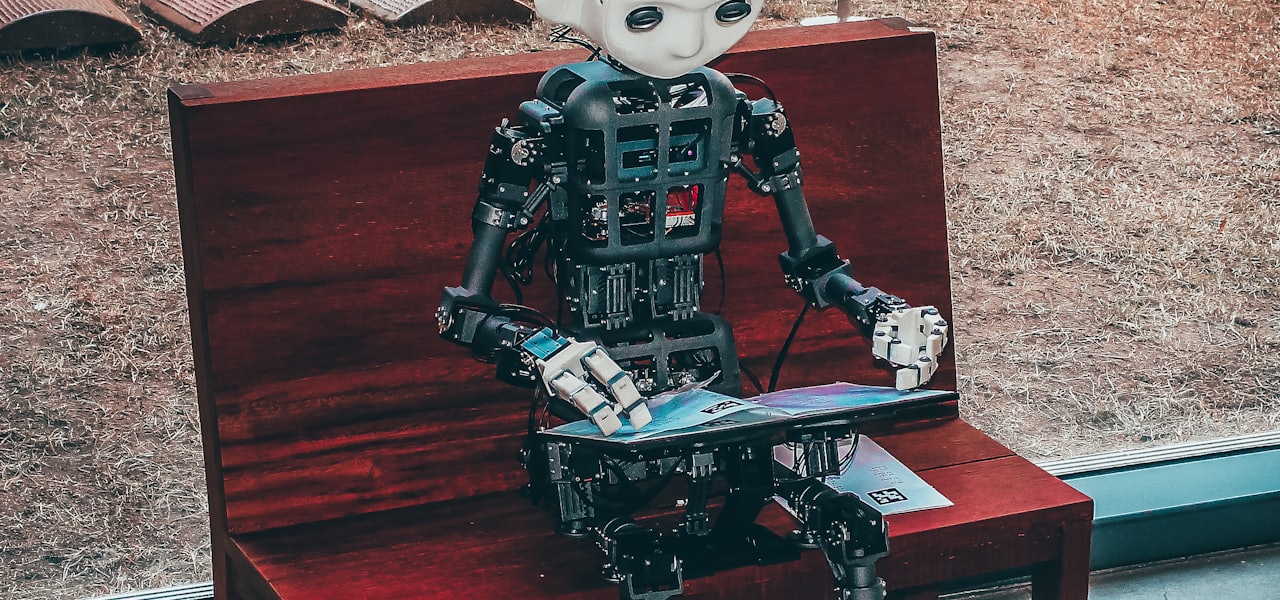
TabPFN (Tabular Prior-data Fitted Network) is a machine learning model for tabular datasets proposed in 2022. It uses a transformer architecture. It is intended for supervised classification and regression analysis on tabular datasets, particularly focusing on small- to medium-sized datasets. The latest version, TabPFN-3, was released in May 2026 and supports datasets with up to one million rows and 200 features. == History == TabPFN was first introduced in a 2022 pre-print and presented at ICLR 2023. TabPFN v2 was published in 2025 in Nature by Hollmann and co-authors. The source code is published on GitHub under a modified Apache License and on PyPi. Writing for ICLR blogs, McCarter states that the model has attracted attention due to its performance on small dataset benchmarks. TabPFN v2.5 was released on November 6, 2025. TabPFN-3 was released on May 12, 2026. Prior Labs, founded in 2024, aims to commercialize TabPFN. As of April 2026, the open-source TabPFN repository had more than 6,000 stars on GitHub. == Overview and pre-training == TabPFN supports classification, regression and generative tasks. It leverages "Prior-Data Fitted Networks" models to model tabular data. By using a transformer pre-trained on synthetic tabular datasets, TabPFN avoids benchmark contamination and costs of curating real-world data. TabPFN v2 was pre-trained on approximately 130 million such datasets. Synthetic datasets are generated using causal models or Bayesian neural networks; this can include simulating missing values, imbalanced data, and noise. Random inputs are passed through these models to generate outputs, with a bias towards simpler causal structures. During pre-training, TabPFN predicts the masked target values of new data points given training data points and their known targets, effectively learning a generic learning algorithm that is executed by running a neural network forward pass. The new dataset is then processed in a single forward pass without retraining. The model's transformer encoder processes features and labels by alternating attention across rows and columns. TabPFN v2 handles numerical and categorical features, missing values, and supports tasks like regression and synthetic data generation, while TabPFN-2.5 scales this approach to datasets with up to 50,000 rows and 2,000 features. TabPFN-3 introduced a redesigned architecture with row-compression, an attention-based many-class decoder, native missing-value handling, and inference optimizations such as row chunking and a reduced key-value cache, with benchmark-validated regimes of up to 1 million rows with 200 features, 100,000 rows with 2,000 features, or 1,000 rows with 20,000 features. Since TabPFN is pre-trained, in contrast to other deep learning methods, it does not require costly hyperparameter optimization. == Research == TabPFN is the subject of on-going research. Applications for TabPFN have been investigated for domains such as chemoproteomics, insurance risk classification, and metagenomics. In clinical research, TabPFN was used in a study on the early detection of pancreatic cancer from blood samples, where it was combined with metabolomic data and reported high diagnostic performance. == Applications == TabPFN has been used in industrial and biomedical contexts. Hitachi Ltd. has been reported to use the model for predictive maintenance in rail networks, with its use described as helping to identify track issues earlier and reduce manual inspections. In the biomedical domain, Oxford Cancer Analytics has used TabPFN in the analysis of proteomic data in lung disease research. A 2025 ML Contests report noted that the winners of DrivenData's PREPARE challenge used TabPFN to generate features for gradient-boosted decision tree models. == Limitations == TabPFN has been criticized for its "one large neural network is all you need" approach to modeling problems. Further, its performance is limited in high-dimensional and large-scale datasets. == Scaling Mode == In late November 2025, Prior Labs introduced ‘‘Scaling Mode’’, an operating mode for TabPFN designed to remove the fixed upper bound on training set size. Earlier versions of TabPFN had been optimized and validated primarily for datasets of up to 100,000 rows, whereas Scaling Mode was reported to extend support to substantially larger datasets, with benchmarked experiments on datasets containing up to 10 million rows. According to Prior Labs, Scaling Mode preserves the existing TabPFN architecture, including its alternating row-attention and column-attention design, as well as the same feature-count limits as prior releases. Inference remains based on a single forward pass rather than dataset-specific gradient-descent training, while scalability is described as being constrained primarily by available compute and memory resources. Prior Labs reported benchmark results on an internal collection of datasets ranging from 1 million to 10 million rows across industry and scientific applications. In these benchmarks, Scaling Mode was compared with CatBoost, XGBoost, LightGBM, and TabPFN 2.5 using 50,000-row subsampling. The company stated that predictive performance improved monotonically with increasing training set size and that no diminishing returns from scaling were observed within the tested range. Prior Labs also announced the release through company and executive social media channels. TabPFN-3 later incorporated related scaling improvements, including row chunking and a reduced key-value cache, into the model architecture and inference pipeline.
Morphing
Morphing is a special effect in motion pictures and animations that changes (or morphs) one image or shape into another through a seamless transition. Traditionally such a depiction would be achieved through dissolving techniques on film. Since the early 1990s, this has been replaced by computer software to create more realistic transitions. A similar method is applied to audio recordings, for example, by changing voices or vocal lines. == Early transformation techniques == Long before digital morphing, several techniques were used for similar image transformations. Some of those techniques are closer to a matched dissolve – a gradual change between two pictures without warping the shapes in the images – while others did change the shapes in between the start and end phases of the transformation. === Tabula scalata === Known since at least the end of the 16th century, Tabula scalata is a type of painting with two images divided over a corrugated surface. Each image is only correctly visible from a certain angle. If the pictures are matched properly, a primitive type of morphing effect occurs when changing from one viewing angle to the other. === Mechanical transformations === Around 1790 French shadow play showman François Dominique Séraphin used a metal shadow figure with jointed parts to have the face of a young woman changing into that of a witch. Some 19th century mechanical magic lantern slides produced changes to the appearance of figures. For instance a nose could grow to enormous size, simply by slowly sliding away a piece of glass with black paint that masked part of another glass plate with the picture. === Matched dissolves === In the first half of the 19th century "dissolving views" were a popular type of magic lantern show, mostly showing landscapes gradually dissolving from a day to night version or from summer to winter. Other uses are known, for instance Henry Langdon Childe showed groves transforming into cathedrals. The 1910 short film Narren-grappen shows a dissolve transformation of the clothing of a female character. Maurice Tourneur's 1915 film Alias Jimmy Valentine featured a subtle dissolve transformation of the main character from respected citizen Lee Randall into his criminal alter ego Jimmy Valentine. The Peter Tchaikovsky Story in a 1959 TV-series episode of Disneyland features a swan automaton transforming into a real ballet dancer. In 1985, Godley & Creme created a "morph" effect using analogue cross-fades on parts of different faces in the video for "Cry". === Animation === In animation, the morphing effect was created long before the introduction of cinema. A phenakistiscope designed by its inventor Joseph Plateau was printed around 1835 and shows the head of a woman changing into a witch and then into a monster. Émile Cohl's 1908 animated film Fantasmagorie featured much morphing of characters and objects drawn in simple outlines. == Digital morphing == In the early 1990s, computer techniques capable of more convincing results saw increasing use. These involved distorting one image at the same time that it faded into another through marking corresponding points and vectors on the "before" and "after" images used in the morph. For example, one would morph one face into another by marking key points on the first face, such as the contour of the nose or location of an eye, and mark where these same points existed on the second face. The computer would then distort the first face to have the shape of the second face at the same time that it faded the two faces. To compute the transformation of image coordinates required for the distortion, the algorithm of Beier and Neely can be used. === Concerns === In 1993 concerns were raised about the authenticity of digitally altered images arising from morphing. Images of fake "tween" people found half way between two morphed people created a skeptical media long before AI. === Early examples === In or before 1986, computer graphics company Omnibus created a digital animation for a Tide commercial with a Tide detergent bottle smoothly morphing into the shape of the United States. The effect was programmed by Bob Hoffman. Omnibus re-used the technique in the movie Flight of the Navigator (1986). It featured scenes with a computer generated spaceship that appeared to change shape. The plaster cast of a model of the spaceship was scanned and digitally modified with techniques that included a reflection mapping technique that was also developed by programmer Bob Hoffman. The 1986 movie The Golden Child implemented early digital morphing effects from animal to human and back. Willow (1988) featured a more detailed digital morphing sequence with a person changing into different animals. A similar process was used a year later in Indiana Jones and the Last Crusade to create Walter Donovan's gruesome demise. Both effects were created by Industrial Light & Magic, using software developed by Tom Brigham and Doug Smythe (AMPAS). In 1991, morphing appeared notably in the Michael Jackson music video "Black or White" and in the movies Terminator 2: Judgment Day and Star Trek VI: The Undiscovered Country. The first application for personal computers to offer morphing was Gryphon Software Morph on the Macintosh. Other early morphing systems included ImageMaster, MorphPlus and CineMorph, all of which premiered for the Amiga in 1992. Other programs became widely available within a year, and for a time the effect became common to the point of cliché. For high-end use, Elastic Reality (based on MorphPlus) saw its first feature film use in In The Line of Fire (1993) and was used in Quantum Leap (work performed by the Post Group). At VisionArt Ted Fay used Elastic Reality to morph Odo for Star Trek: Deep Space Nine. The Snoop Dogg music video "Who Am I? (What's My Name?)", where Snoop Dogg and the others morph into dogs. Elastic Reality was later purchased by Avid, having already become the de facto system of choice, used in many hundreds of films. The technology behind Elastic Reality earned two Academy Awards in 1996 for Scientific and Technical Achievement going to Garth Dickie and Perry Kivolowitz. The effect is technically called a "spatially warped cross-dissolve". The first social network designed for user-generated morph examples to be posted online was Galleries by Morpheus. In late 1991 Yeti Productions employed a young Stephen Regelous to run it's 486 computer graphics system in Wellington New Zealand. After producer Barry Thomas showed him Michael Jackson's "Black or White", Regelous wrote 10,000 lines of C++ code of triangle-based digital morphing software. Together they created morphing based TV commercials for The NZ Cancer Society, Fit food, Salvation Army and others. The Fit food commercial employed morphing with 35mm, pin registered, digitally controlled motion control designed and made by Russell Collins with software by Stephen Regelous. In Taiwan, Aderans, a hair loss solutions provider, did a TV commercial featuring a morphing sequence in which people with lush, thick hair morph into one another, reminiscent of the end sequence of the "Black or White" video. === Present use === Morphing algorithms continue to advance and programs can automatically morph images that correspond closely enough with relatively little instruction from the user. This has led to the use of morphing techniques to create convincing slow-motion effects where none existed in the original film or video footage by morphing between each individual frame using optical flow technology. Morphing has also appeared as a transition technique between one scene and another in television shows, even if the contents of the two images are entirely unrelated. The algorithm in this case attempts to find corresponding points between the images and distort one into the other as they crossfade. While perhaps less obvious than in the past, morphing is used heavily today. Whereas the effect was initially a novelty, today, morphing effects are most often designed to be seamless and invisible to the eye. A particular use for morphing effects is modern digital font design. Using morphing technology, called interpolation or multiple master tech, a designer can create an intermediate between two styles, for example generating a semibold font by compromising between a bold and regular style, or extend a trend to create an ultra-light or ultra-bold. The technique is commonly used by font design studios. == Software == After Effects Animate Elastic Reality FantaMorph Gryphon Software Morph Morph Age Morpheus Nuke SilhouetteFX
AUTINDEX
AUTINDEX is a commercial text mining software package based on sophisticated linguistics. AUTINDEX, resulting from research in information extraction, is a product of the Institute of Applied Information Sciences (IAI) which is a non-profit institute that has been researching and developing language technology since its foundation in 1985. IAI is an institute affiliated to Saarland University in Saarbrücken, Germany. AUTINDEX is the result of a number of research projects funded by the EU (Project BINDEX), by Deutsche Forschungsgemeinschaft and the German Ministry for Economy. Amongst the latter there are the projects LinSearch, and WISSMER, see also the reference to IAI-Website. The basic functionality of AUTINDEX is the extraction of key words from a document to represent the semantics of the document. Ideally the system is integrated with a thesaurus that defines the standardised terms to be used for key word assignment. AUTINDEX is used in library applications (e.g. integrated in dandelon.com) as well as in high quality (expert) information systems, and in document management and content management environments. Together with AUTINDEX a number of additional software comes along such as an integration with Apache Solr / Lucene to provide a complete information retrieval environment, a classification and categorisation system on the basis of a machine learning software that assigns domains to the document, and a system for searching with semantically similar terms that are collected in so called tag clouds.
Image registration
Image registration is the process of transforming different sets of data into one coordinate system. Data may be multiple photographs, data from different sensors, times, depths, or viewpoints. It is used in computer vision, medical imaging, military automatic target recognition, and compiling and analyzing images and data from satellites. Registration is necessary in order to be able to compare or integrate the data obtained from these different measurements. == Algorithm classification == === Intensity-based vs feature-based === Image registration or image alignment algorithms can be classified into intensity-based and feature-based. One of the images is referred to as the target, fixed or sensed image and the others are referred to as the moving or source images. Image registration involves spatially transforming the source/moving image(s) to align with the target image. The reference frame in the target image is stationary, while the other datasets are transformed to match to the target. Intensity-based methods compare intensity patterns in images via correlation metrics, while feature-based methods find correspondence between image features such as points, lines, and contours. Intensity-based methods register entire images or sub-images. If sub-images are registered, centers of corresponding sub images are treated as corresponding feature points. Feature-based methods establish a correspondence between a number of especially distinct points in images. Knowing the correspondence between a number of points in images, a geometrical transformation is then determined to map the target image to the reference images, thereby establishing point-by-point correspondence between the reference and target images. Methods combining intensity-based and feature-based information have also been developed. === Transformation models === Image registration algorithms can also be classified according to the transformation models they use to relate the target image space to the reference image space. The first broad category of transformation models includes affine transformations, which include rotation, scaling, translation and shearing. Affine transformations are global in nature, thus, they cannot model local geometric differences between images. The second category of transformations allow 'elastic' or 'nonrigid' transformations. These transformations are capable of locally warping the target image to align with the reference image. Nonrigid transformations include radial basis functions (thin-plate or surface splines, multiquadrics, and compactly-supported transformations), physical continuum models (viscous fluids), and large deformation models (diffeomorphisms). Transformations are commonly described by a parametrization, where the model dictates the number of parameters. For instance, the translation of a full image can be described by a translation vector parameter. These models are called parametric models. Non-parametric models on the other hand, do not follow any parameterization, allowing each image element to be displaced arbitrarily. There are a number of programs that implement both estimation and application of a warp-field. It is a part of the SPM and AIR programs. === Transformations of coordinates via the law of function composition rather than addition === Alternatively, many advanced methods for spatial normalization are building on structure preserving transformations homeomorphisms and diffeomorphisms since they carry smooth submanifolds smoothly during transformation. Diffeomorphisms are generated in the modern field of Computational Anatomy based on flows since diffeomorphisms are not additive although they form a group, but a group under the law of function composition. For this reason, flows which generalize the ideas of additive groups allow for generating large deformations that preserve topology, providing 1-1 and onto transformations. Computational methods for generating such transformation are often called LDDMM which provide flows of diffeomorphisms as the main computational tool for connecting coordinate systems corresponding to the geodesic flows of Computational Anatomy. There are a number of programs which generate diffeomorphic transformations of coordinates via diffeomorphic mapping including MRI Studio and MRI Cloud.org === Spatial vs frequency domain methods === Spatial methods operate in the image domain, matching intensity patterns or features in images. Some of the feature matching algorithms are outgrowths of traditional techniques for performing manual image registration, in which an operator chooses corresponding control points (CP) in images. When the number of control points exceeds the minimum required to define the appropriate transformation model, iterative algorithms like RANSAC can be used to robustly estimate the parameters of a particular transformation type (e.g. affine) for registration of the images. Frequency-domain methods find the transformation parameters for registration of the images while working in the transform domain. Such methods work for simple transformations, such as translation, rotation, and scaling. Applying the phase correlation method to a pair of images produces a third image which contains a single peak. The location of this peak corresponds to the relative translation between the images. Unlike many spatial-domain algorithms, the phase correlation method is resilient to noise, occlusions, and other defects typical of medical or satellite images. Additionally, the phase correlation uses the fast Fourier transform to compute the cross-correlation between the two images, generally resulting in large performance gains. The method can be extended to determine rotation and scaling differences between two images by first converting the images to log-polar coordinates. Due to properties of the Fourier transform, the rotation and scaling parameters can be determined in a manner invariant to translation. === Single- vs multi-modality methods === Another classification can be made between single-modality and multi-modality methods. Single-modality methods tend to register images in the same modality acquired by the same scanner/sensor type, while multi-modality registration methods tended to register images acquired by different scanner/sensor types. Multi-modality registration methods are often used in medical imaging as images of a subject are frequently obtained from different scanners. Examples include registration of brain CT/MRI images or whole body PET/CT images for tumor localization, registration of contrast-enhanced CT images against non-contrast-enhanced CT images for segmentation of specific parts of the anatomy, and registration of ultrasound and CT images for prostate localization in radiotherapy. === Automatic vs interactive methods === Registration methods may be classified based on the level of automation they provide. Manual, interactive, semi-automatic, and automatic methods have been developed. Manual methods provide tools to align the images manually. Interactive methods reduce user bias by performing certain key operations automatically while still relying on the user to guide the registration. Semi-automatic methods perform more of the registration steps automatically but depend on the user to verify the correctness of a registration. Automatic methods do not allow any user interaction and perform all registration steps automatically. === Similarity measures for image registration === Image similarities are broadly used in medical imaging. An image similarity measure quantifies the degree of similarity between intensity patterns in two images. The choice of an image similarity measure depends on the modality of the images to be registered. Common examples of image similarity measures include cross-correlation, mutual information, sum of squared intensity differences, and ratio image uniformity. Mutual information and normalized mutual information are the most popular image similarity measures for registration of multimodality images. Cross-correlation, sum of squared intensity differences and ratio image uniformity are commonly used for registration of images in the same modality. Many new features have been derived for cost functions based on matching methods via large deformations have emerged in the field Computational Anatomy including Measure matching which are pointsets or landmarks without correspondence, Curve matching and Surface matching via mathematical currents and varifolds. == Uncertainty == There is a level of uncertainty associated with registering images that have any spatio-temporal differences. A confident registration with a measure of uncertainty is critical for many change detection applications such as medical diagnostics. In remote sensing applications where a digital image pixel may represent several kilometers of spatial distance (such as NASA's LANDSAT imagery), an uncertain image registration can mean that a solution could b
ISLRN
The ISLRN or International Standard Language Resource Number is Persistent Unique Identifier for Language Resources. == Context == On November 18, 2013, 12 major organisations (see list below) from the fields Language Resources and Technologies, Computational Linguistics, and Digital Humanities held a cooperation meeting in Paris (France) and agreed to announce the establishment of the International Standard Language Resource Number (ISLRN), to be assigned to each Language Resource. Among the 12 organisations, 4 institutions constitute the ISLRN Steering Committee (ST) ADHO ACL Asian Federation of Natural Language Processing ST COCOSDA, International Committee for the Coordination & Standardisation of Speech Databases and Assessment Techniques ICCL (COLING) European Data Forum ELRA ST IAMT, International Association for Machine Translation Archived 2010-06-24 at the Wayback Machine ISCA LDC ST Oriental COCOSDA ST RMA, Language Resource Management Agency == Size and Content == The Joint Research Centre(JRC), the [European Commission]'s in-house science service, was the first organisation to adopt the ISLRN initiative and requested. 2500 resources and tools have already been allocated an ISLRN. These resources include written data (Annotated corpus, Annotated text, List of misspelled word, Terminological database, Treebank, Wordnet, etc.) and speech corpora (Synthesised Speech, Transcripts and Audiovisual Recordings, Conversational Speech, Folk Sayings, etc.) == Objectives == Providing Language Resources with unique names and identifiers using a standardized nomenclature ensures the identification of each Language Resources and streamlines the citation with proper references in activities within Human Language Technology as well as in documents and scientific publications. Such unique identifier also enhances the reproducibility, an essential feature of scientific work.
Dark data
Dark data is data which is acquired through various computer network operations but not used in any manner to derive insights or for decision making. The ability of an organisation to collect data can exceed the throughput at which it can analyse the data. In some cases the organisation may not even be aware that the data is being collected. IBM estimate that roughly 90 percent of data generated by sensors and analog-to-digital conversions never get used. In an industrial context, dark data can include information gathered by sensors and telematics. Organizations retain dark data for a multitude of reasons, and it is estimated that most companies are only analyzing 1% of their data. Often it is stored for regulatory compliance and record keeping. Some organizations believe that dark data could be useful to them in the future, once they have acquired better analytic and business intelligence technology to process the information. Because storage is inexpensive, storing data is easy. However, storing and securing the data usually entails greater expenses (or even risk) than the potential return profit. In academic discourse, the term dark data was essentially coined by Bryan P. Heidorn. He uses it to describe research data, especially from the long tail of science (the many, small research projects), which are not or no longer available for research because they disappear in a drawer without adequate data management. Without this, the data become dark, and further reasons for this are e.g. missing metadata annotation, missing data management plans and data curators. == Analysis == The term "dark data" very often refers to data that is not amenable to computer processing. For example, a company might have a great deal of data that exists only as scanned page-images. Even the bare text in such documents is not available without something like Optical character recognition, which can vary greatly in accuracy. Even with OCR, the significance of each part of the data is unavailable. An obvious examples is whether a capitalized word is a name or not, and if so, whether it represents a person, place, organization, or even a work of art. Bibliographic and other references, data within tables (that may be labeled quite adequately for humans, but not for processing), and countless assertions represented with the full complexity and ambiguity of human language. A lot of unused data is very valuable, and would be used if it could be; but is blocked because it is in formats that are difficult to process, categorise, identify, and analyse. Often the reason that business does not use their dark data is because of the amount of resources it would take and the difficulty of having that data analysed. In other words, the data is "dark" not because it is not used, but because it cannot (feasibly or affordably) be used, given its poor representation. There are many data representations that can make data much more accessible for automation. However, a great deal of information lacks any such identification of information items or relationships; and much more loses it during "downhill" conversion such as saving to page-oriented representations, printing, scanning, or faxing. The journey back "uphill" can be costly. According to Computer Weekly, 60% of organisations believe that their own business intelligence reporting capability is "inadequate" and 65% say that they have "somewhat disorganised content management approaches". == Relevance == Useful data may become dark data after it becomes irrelevant, as it is not processed fast enough. This is called "perishable insights" in "live flowing data". For example, if the geolocation of a customer is known to a business, the business can make offer based on the location, however if this data is not processed immediately, it may be irrelevant in the future. According to IBM, about 60 percent of data loses its value immediately. == Storage == According to the New York Times, 90% of energy used by data centres is wasted. If data was not stored, energy costs could be saved. Furthermore, there are costs associated with the underutilisation of information and thus missed opportunities. According to Datamation, "the storage environments of EMEA organizations consist of 54 percent dark data, 32 percent redundant, obsolete and trivial data and 14 percent business-critical data. By 2020, this can add up to $891 billion in storage and management costs that can otherwise be avoided." The continuous storage of dark data can put an organisation at risk, especially if this data is sensitive. In the case of a breach, this can result in serious repercussions. These can be financial, legal and can seriously hurt an organisation's reputation. For example, a breach of private records of customers could result in the stealing of sensitive information, which could result in identity theft. Another example could be the breach of the company's own sensitive information, for example relating to research and development. These risks can be mitigated by assessing and auditing whether this data is useful to the organisation, employing strong encryption and security and finally, if it is determined to be discarded, then it should be discarded in a way that it becomes unretrievable. == Future == It is generally considered that as more advanced computing systems for analysis of data are built, the higher the value of dark data will be. It has been noted that "data and analytics will be the foundation of the modern industrial revolution". Of course, this includes data that is currently considered "dark data" since there are not enough resources to process it. All this data that is being collected can be used in the future to bring maximum productivity and an ability for organisations to meet consumers' demand. Technology advancements are helping to leverage this dark data affordably. Furthermore, many organisations do not realise the value of dark data right now, for example in healthcare and education organisations deal with large amounts of data that could create a significant "potential to service students and patients in the manner in which the consumer and financial services pursue their target population".
Visual servoing
Visual servoing, also known as vision-based robot control and abbreviated VS, is a technique which uses feedback information extracted from a vision sensor (visual feedback) to control the motion of a robot. One of the earliest papers that talks about visual servoing was from the SRI International Labs in 1979. == Visual servoing taxonomy == There are two fundamental configurations of the robot end-effector (hand) and the camera: Eye-in-hand, or end-point open-loop control, where the camera is attached to the moving hand and observing the relative position of the target. Eye-to-hand, or end-point closed-loop control, where the camera is fixed in the world and observing the target and the motion of the hand. Visual Servoing control techniques are broadly classified into the following types: Image-based (IBVS) Position/pose-based (PBVS) Hybrid approach IBVS was proposed by Weiss and Sanderson. The control law is based on the error between current and desired features on the image plane, and does not involve any estimate of the pose of the target. The features may be the coordinates of visual features, lines or moments of regions. IBVS has difficulties with motions very large rotations, which has come to be called camera retreat. PBVS is a model-based technique (with a single camera). This is because the pose of the object of interest is estimated with respect to the camera and then a command is issued to the robot controller, which in turn controls the robot. In this case the image features are extracted as well, but are additionally used to estimate 3D information (pose of the object in Cartesian space), hence it is servoing in 3D. Hybrid approaches use some combination of the 2D and 3D servoing. There have been a few different approaches to hybrid servoing 2-1/2-D Servoing Motion partition-based Partitioned DOF Based == Survey == The following description of the prior work is divided into 3 parts Survey of existing visual servoing methods. Various features used and their impacts on visual servoing. Error and stability analysis of visual servoing schemes. === Survey of existing visual servoing methods === Visual servo systems, also called servoing, have been around since the early 1980s , although the term visual servo itself was only coined in 1987. Visual Servoing is, in essence, a method for robot control where the sensor used is a camera (visual sensor). Servoing consists primarily of two techniques, one involves using information from the image to directly control the degrees of freedom (DOF) of the robot, thus referred to as Image Based Visual Servoing (IBVS). While the other involves the geometric interpretation of the information extracted from the camera, such as estimating the pose of the target and parameters of the camera (assuming some basic model of the target is known). Other servoing classifications exist based on the variations in each component of a servoing system , e.g. the location of the camera, the two kinds are eye-in-hand and hand–eye configurations. Based on the control loop, the two kinds are end-point-open-loop and end-point-closed-loop. Based on whether the control is applied to the joints (or DOF) directly or as a position command to a robot controller the two types are direct servoing and dynamic look-and-move. Being one of the earliest works the authors proposed a hierarchical visual servo scheme applied to image-based servoing. The technique relies on the assumption that a good set of features can be extracted from the object of interest (e.g. edges, corners and centroids) and used as a partial model along with global models of the scene and robot. The control strategy is applied to a simulation of a two and three DOF robot arm. Feddema et al. introduced the idea of generating task trajectory with respect to the feature velocity. This is to ensure that the sensors are not rendered ineffective (stopping the feedback) for any the robot motions. The authors assume that the objects are known a priori (e.g. CAD model) and all the features can be extracted from the object. The work by Espiau et al. discusses some of the basic questions in visual servoing. The discussions concentrate on modeling of the interaction matrix, camera, visual features (points, lines, etc..). In an adaptive servoing system was proposed with a look-and-move servoing architecture. The method used optical flow along with SSD to provide a confidence metric and a stochastic controller with Kalman filtering for the control scheme. The system assumes (in the examples) that the plane of the camera and the plane of the features are parallel., discusses an approach of velocity control using the Jacobian relationship s˙ = Jv˙ . In addition the author uses Kalman filtering, assuming that the extracted position of the target have inherent errors (sensor errors). A model of the target velocity is developed and used as a feed-forward input in the control loop. Also, mentions the importance of looking into kinematic discrepancy, dynamic effects, repeatability, settling time oscillations and lag in response. Corke poses a set of very critical questions on visual servoing and tries to elaborate on their implications. The paper primarily focuses the dynamics of visual servoing. The author tries to address problems like lag and stability, while also talking about feed-forward paths in the control loop. The paper also, tries to seek justification for trajectory generation, methodology of axis control and development of performance metrics. Chaumette in provides good insight into the two major problems with IBVS. One, servoing to a local minima and second, reaching a Jacobian singularity. The author show that image points alone do not make good features due to the occurrence of singularities. The paper continues, by discussing the possible additional checks to prevent singularities namely, condition numbers of J_s and Jˆ+_s, to check the null space of ˆ J_s and J^T_s . One main point that the author highlights is the relation between local minima and unrealizable image feature motions. Over the years many hybrid techniques have been developed. These involve computing partial/complete pose from Epipolar Geometry using multiple views or multiple cameras. The values are obtained by direct estimation or through a learning or a statistical scheme. While others have used a switching approach that changes between image-based and position-based on a Lyapnov function. The early hybrid techniques that used a combination of image-based and pose-based (2D and 3D information) approaches for servoing required either a full or partial model of the object in order to extract the pose information and used a variety of techniques to extract the motion information from the image. used an affine motion model from the image motion in addition to a rough polyhedral CAD model to extract the object pose with respect to the camera to be able to servo onto the object (on the lines of PBVS). 2-1/2-D visual servoing developed by Malis et al. is a well known technique that breaks down the information required for servoing into an organized fashion which decouples rotations and translations. The papers assume that the desired pose is known a priori. The rotational information is obtained from partial pose estimation, a homography, (essentially 3D information) giving an axis of rotation and the angle (by computing the eigenvalues and eigenvectors of the homography). The translational information is obtained from the image directly by tracking a set of feature points. The only conditions being that the feature points being tracked never leave the field of view and that a depth estimate be predetermined by some off-line technique. 2-1/2-D servoing has been shown to be more stable than the techniques that preceded it. Another interesting observation with this formulation is that the authors claim that the visual Jacobian will have no singularities during the motions. The hybrid technique developed by Corke and Hutchinson, popularly called portioned approach partitions the visual (or image) Jacobian into motions (both rotations and translations) relating X and Y axes and motions related to the Z axis. outlines the technique, to break out columns of the visual Jacobian that correspond to the Z axis translation and rotation (namely, the third and sixth columns). The partitioned approach is shown to handle the Chaumette Conundrum discussed in. This technique requires a good depth estimate in order to function properly. outlines a hybrid approach where the servoing task is split into two, namely main and secondary. The main task is keep the features of interest within the field of view. While the secondary task is to mark a fixation point and use it as a reference to bring the camera to the desired pose. The technique does need a depth estimate from an off-line procedure. The paper discusses two examples for which depth estimates are obtained from robot odometry and by assuming that all