The Association for Computational Linguistics (ACL) is a scientific and professional organization for people working on natural language processing. Its namesake conference is one of the primary high impact conferences for natural language processing research, along with EMNLP. The conference is held each summer in locations where significant computational linguistics research is carried out. It was founded in 1962, originally named the Association for Machine Translation and Computational Linguistics (AMTCL). It became the ACL in 1968. The ACL has a European (EACL), a North American (NAACL), and an Asian (AACL) chapter. == History == The ACL was founded in 1962 as the Association for Machine Translation and Computational Linguistics (AMTCL). The initial membership was about 100. In 1965, the AMTCL took over the journal Mechanical Translation and Computational Linguistics. This journal was succeeded by many other journals: the American Journal of Computational Linguistics (1974–1978, 1980–1983), and then Computational Linguistics (1984–present). Since 1988, the journal has been published for the ACL by MIT Press. The annual meeting was first held in 1963 in conjunction with the Association for Computing Machinery National Conference. The annual meeting was, for a long time, relatively informal and did not publish anything longer than abstracts. By 1968, the society took on its current name, the Association for Computational Linguistics (ACL). The publication of the annual meeting's Proceedings of the ACL began in 1979 and gradually matured into its modern form. Many of the meetings were held in conjunction with the Linguistic Society of America, and a few with the American Society for Information Science and the Cognitive Science Society. The United States government sponsored much research from 1989 to 1994, characterized by an increase in author retention rates and an increase in research in some key topics, such as speech recognition, in ACL. By the 21st century, it was able to maintain authors at a high rate who coalesced in a more stable arrangement around individual research topics. In 1991, the group published a prototype for a text generator based on the universal grammar theory of Noam Chomsky. The system, nicknamed Parrot, relied on a finite set of syntactic transformations and a hand-curated lexicon. Despite some initial success, including experimentation with morpheme syntactics, funding halted after the research team encountered intractable difficulties with inflection and abstract locutions. == Annual Meeting of the ACL == Every year, the ACL holds the Annual Meeting of the ACL. The location lies in Europe in years zero modulo three, North America in years one modulo three, and Asia–Australia in years two modulo three. In 2020, the Annual Meeting received for the first time more submissions from China than the United States. == Activities == The ACL organizes several of the top conferences and workshops in the field of computational linguistics and natural language processing. These include: Annual Meeting of the Association for Computational Linguistics (ACL), the flagship conference of the organization Empirical Methods in Natural Language Processing (EMNLP) International Joint Conference on Natural Language Processing (IJCNLP), held jointly one of the other conferences on a rotating basis Conference on Computational Natural Language Learning (CoNLL) Lexical and Computational Semantics and Semantic Evaluation (SemEval) Joint Conference on Lexical and Computational Semantics (SEM) Workshop on Statistical Machine Translation (WMT) Besides conferences, the ACL also sponsors the journals Computational Linguistics and Transactions of the Association for Computational Linguistics (TACL). Papers and other presentations at ACL and ACL-affiliated venues are archived online in the open-access ACL Anthology. == Special Interest Groups == ACL has a large number of Special Interest Groups (SIGs), focusing on specific areas of natural language processing. Some current SIGs within ACL are: == Presidents == Each year, the ACL elects a distinguished computational linguist who becomes vice-president of the organization in the next calendar year and president one year later. Recent ACL presidents are:
CloudMinds
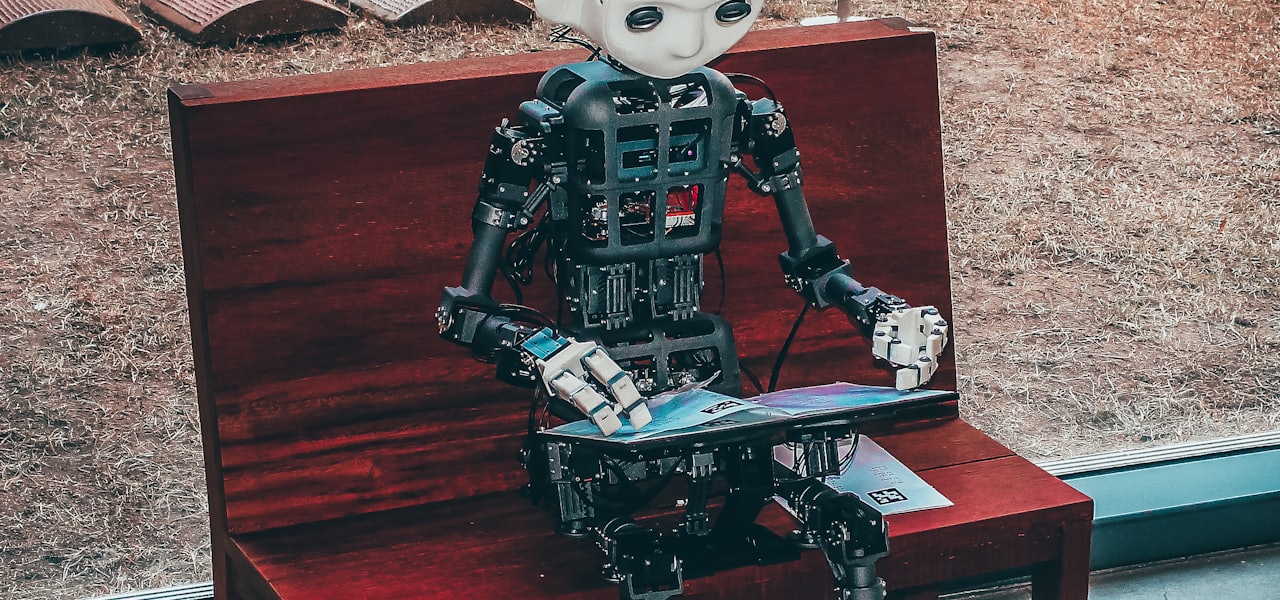
CloudMinds is an operator of cloud-based systems for cognitive robotics. == History == CloudMinds was founded in 2015 and is backed by SoftBank, Foxconn, Walden Venture Investments, and Keytone Ventures. CloudMinds has developed research in smart devices, robot control, high-speed security networks, and cloud intelligence integration. CloudMinds developed the Mobile Intranet Cloud Services (MCS) based on these technologies in order to increase the information security of the cloud robot remote control. The technology has been applied in the fields of finance, medicine, the military, public safety, and large-scale manufacturing. == U.S. sanctions == In May 2020, CloudMinds was added to the Bureau of Industry and Security's Entity List due to U.S. national security concerns.
Kuwahara filter
The Kuwahara filter is a non-linear smoothing filter used in image processing for adaptive noise reduction. Most filters that are used for image smoothing are linear low-pass filters that effectively reduce noise but also blur out the edges. However the Kuwahara filter is able to apply smoothing on the image while preserving the edges. It is named after Michiyoshi Kuwahara, Ph.D., who worked at Kyoto and Osaka Sangyo Universities in Japan, developing early medical imaging of dynamic heart muscle in the 1970s and 80s. == The Kuwahara operator == Suppose that I ( x , y ) {\displaystyle I(x,y)} is a grey scale image and that we take a square window of size 2 a + 1 {\displaystyle 2a+1} centered around a point ( x , y ) {\displaystyle (x,y)} in the image. This square can be divided into four smaller square regions Q i = 1 ⋯ 4 {\displaystyle Q_{i=1\cdots 4}} each of which will be Q i ( x , y ) = { [ x , x + a ] × [ y , y + a ] if i = 1 [ x − a , x ] × [ y , y + a ] if i = 2 [ x − a , x ] × [ y − a , y ] if i = 3 [ x , x + a ] × [ y − a , y ] if i = 4 {\displaystyle Q_{i}(x,y)={\begin{cases}\left[x,x+a\right]\times \left[y,y+a\right]&{\mbox{ if }}i=1\\\left[x-a,x\right]\times \left[y,y+a\right]&{\mbox{ if }}i=2\\\left[x-a,x\right]\times \left[y-a,y\right]&{\mbox{ if }}i=3\\\left[x,x+a\right]\times \left[y-a,y\right]&{\mbox{ if }}i=4\\\end{cases}}} where × {\displaystyle \times } is the cartesian product. Pixels located on the borders between two regions belong to both regions so there is a slight overlap between subregions. The arithmetic mean m i ( x , y ) {\displaystyle m_{i}(x,y)} and standard deviation σ i ( x , y ) {\displaystyle \sigma _{i}(x,y)} of the four regions centered around a pixel (x,y) are calculated and used to determine the value of the central pixel. The output of the Kuwahara filter Φ ( x , y ) {\displaystyle \Phi (x,y)} for any point ( x , y ) {\displaystyle (x,y)} is then given by Φ ( x , y ) = m i ( x , y ) {\textstyle \Phi (x,y)=m_{i}(x,y)} where i = a r g min j σ j ( x , y ) {\displaystyle i=\operatorname {arg\min } _{j}\sigma _{j}(x,y)} . This means that the central pixel will take the mean value of the area that is most homogenous. The location of the pixel in relation to an edge plays a great role in determining which region will have the greater standard deviation. If for example the pixel is located on a dark side of an edge it will most probably take the mean value of the dark region. On the other hand, should the pixel be on the lighter side of an edge it will most probably take a light value. On the event that the pixel is located on the edge it will take the value of the more smooth, least textured region. The fact that the filter takes into account the homogeneity of the regions ensures that it will preserve the edges while using the mean creates the blurring effect. Similarly to the median filter, the Kuwahara filter uses a sliding window approach to access every pixel in the image. The size of the window is chosen in advance and may vary depending on the desired level of blur in the final image. Bigger windows typically result in the creation of more abstract images whereas small windows produce images that retain their detail. Typically windows are chosen to be square with sides that have an odd number of pixels for symmetry. However, there are variations of the Kuwahara filter that use rectangular windows. Additionally, the subregions do not need to overlap or have the same size as long as they cover all of the window. == Color images == For color images, the filter should not be performed by applying the filter to each RGB channel separately, and then recombining the three filtered color channels to form the filtered RGB image. The main problem with that is that the quadrants will have different standard deviations for each of the channels. For example, the upper left quadrant may have the lowest standard deviation in the red channel, but the lower right quadrant may have the lowest standard deviation in the green channel. This situation would result in the color of the central pixel to be determined by different regions, which might result in color artifacts or blurrier edges. To overcome this problem, for color images a slightly modified Kuwahara filter must be used. The image is first converted into another color space, the HSV color space. The modified filter then operates on only the "brightness" channel, the Value coordinate in the HSV model. The variance of the "brightness" of each quadrant is calculated to determine the quadrant from which the final filtered color should be taken from. The filter will produce an output for each channel which will correspond to the mean of that channel from the quadrant that had the lowest standard deviation in "brightness". This ensures that only one region will determine the RGB values of the central pixel. ImageMagick uses a similar approach, but using the Rec. 709 Luma as the brightness metric. === Julia Implementation === == Applications == Originally the Kuwahara filter was proposed for use in processing RI-angiocardiographic images of the cardiovascular system. The fact that any edges are preserved when smoothing makes it especially useful for feature extraction and segmentation and explains why it is used in medical imaging. The Kuwahara filter however also finds many applications in artistic imaging and fine-art photography due to its ability to remove textures and sharpen the edges of photographs. The level of abstraction helps create a desirable painting-like effect in artistic photographs especially in the case of the colored image version of the filter. These applications have known great success and have encouraged similar research in the field of image processing for the arts. Although the vast majority of applications have been in the field of image processing there have been cases that use modifications of the Kuwahara filter for machine learning tasks such as clustering. The Kuwahara filter has been implemented in CVIPtools. The Kuwahara filter is present as a shader node in Blender. == Drawbacks and restrictions == The Kuwahara filter despite its capabilities in edge preservation has certain drawbacks. At a first glance it is noticeable that the Kuwahara filter does not take into account the case where two regions have equal standard deviations. This is not often the case in real images since it is rather hard to find two regions with exactly the same standard deviation due to the noise that is always present. In cases where two regions have similar standard deviations the value of the center pixel could be decided at random by the noise in these regions. Again this would not be a problem if the regions had the same mean. However, it is not unusual for regions of very different means to have the same standard deviation. This makes the Kuwahara filter susceptible to noise. Different ways have been proposed for dealing with this issue, one of which is to set the value of the center pixel to ( m 1 + m 2 ) / 2 {\textstyle (m_{1}+m_{2})/2} in cases where the standard deviation of two regions do not differ more than a certain value D {\displaystyle D} . The Kuwahara filter is also known to create block artifacts in the images especially in regions of the image that are highly textured. These blocks disrupt the smoothness of the image and are considered to have a negative effect in the aesthetics of the image. This phenomenon occurs due to the division of the window into square regions. A way to overcome this effect is to take windows that are not rectangular(i.e. circular windows) and separate them into more non-rectangular regions. There have also been approaches where the filter adapts its window depending on the input image. == Extensions of the Kuwahara filter == The success of the Kuwahara filter has spurred an increase the development of edge-enhancing smoothing filters. Several variations have been proposed for similar use most of which attempt to deal with the drawbacks of the original Kuwahara filter. The "Generalized Kuwahara filter" proposed by P. Bakker considers several windows that contain a fixed pixel. Each window is then assigned an estimate and a confidence value. The value of the fixed pixel then takes the value of the estimate of the window with the highest confidence. This filter is not characterized by the same ambiguity in the presence of noise and manages to eliminate the block artifacts. The "Mean of Least Variance"(MLV) filter, proposed by M.A. Schulze also produces edge-enhancing smoothing results in images. Similarly to the Kuwahara filter it assumes a window of size 2 d − 1 × 2 d − 1 {\displaystyle 2d-1\times 2d-1} but instead of searching amongst four subregions of size d × d {\displaystyle d\times d} for the one with minimum variance it searches amongst all possible d × d {\displaystyle d\times d} subregions. This means the central pixel of the window will be assigned the mean of the one subregion out of a poss
Super-resolution imaging
Super-resolution imaging (SR) is a class of techniques that improve the resolution of an imaging system. In optical SR the diffraction limit of systems is transcended, while in geometrical SR the resolution of digital imaging sensors is enhanced. In some radar and sonar imaging applications (e.g. magnetic resonance imaging (MRI), high-resolution computed tomography), subspace decomposition-based methods (e.g. MUSIC) and compressed sensing-based algorithms (e.g., SAMV) are employed to achieve SR over standard periodogram algorithm. Super-resolution imaging techniques are used in general image processing and in super-resolution microscopy. == Super-resolution principles == Several concepts are fundamental to super-resolution imaging: Diffraction limit: the capacity of an optical instrument to reproduce the details of an object in an image has limits that are imposed by laws of physics: the diffraction equations in the wave theory of light, or the uncertainty principle for photons in quantum mechanics. Information transfer can never be increased beyond this boundary, but packets outside the limits can be cleverly swapped for (or multiplexed with) some inside it. Super-resolution microscopy does not so much “break” as “circumvent” the diffraction limit. New procedures probing electro-magnetic disturbances at the molecular level (in the so-called near field) remain fully consistent with Maxwell's equations. Spatial frequency domain: A succinct expression of the diffraction limit is given in the spatial frequency domain. In Fourier optics light distributions are expressed as superpositions of a series of grating light patterns in a range of fringe widths - these widths represent the spatial frequencies. It is generally taught that diffraction theory stipulates an upper limit, the cut-off spatial-frequency, beyond which pattern elements fail to be transferred into the optical image, i.e., are not resolved. But in fact what is set by diffraction theory is the width of the passband, not a fixed upper limit. No laws of physics are broken when a spatial frequency band beyond the cut-off spatial frequency is swapped for one inside it: this has long been implemented in dark-field microscopy. Nor are information-theoretical rules broken when superimposing several bands, disentangling them in the received image needs assumptions of object invariance during multiple exposures, i.e., the substitution of one kind of uncertainty for another. Information: When the term super-resolution is used in techniques based on the inference of object details using a statistical treatment of the image within standard resolution limits (for example, averaging multiple exposures), it involves an exchange of one kind of information (extracting signal from noise) for another (the assumption that the target has remained invariant). Recent breakthroughs incorporate quantum-transformer hybrids into super-resolution, such as QUIET‑SR, a 2025 model that employs shifted quantum window attention within a transformer to enhance image detail while respecting diffraction and information-theory limits Similarly, frequency-integrated transformers (e.g., FIT) enrich super-resolution by explicitly combining spatial and frequency-domain information via FFT-based attention, improving reconstruction across scales Resolution and localization: True resolution involves the distinction of whether a target, e.g. a star or a spectral line, is single or double, ordinarily requiring separable peaks in the image. When a target is known to be single, its location can be determined with higher precision than the image width by finding the centroid (center of gravity) of its image light distribution. The word ultra-resolution had been proposed for this process but it did not catch on, and the high-precision localization procedure is typically referred to as super-resolution. == Techniques == === Optical or diffractive super-resolution === Substituting spatial-frequency bands: Though the bandwidth allowable by diffraction is fixed, it can be positioned anywhere in the spatial-frequency spectrum. Dark-field illumination in microscopy is an example. See also aperture synthesis. ==== Multiplexing spatial-frequency bands ==== An image is formed using the normal passband of the optical device. Then, some known light structure (for example, a set of light fringes) is superimposed on the target. The image now contains components resulting from the combination of the target and the superimposed light structure, e.g. moiré fringes, and carries information about target detail which simple unstructured illumination does not. The “superresolved” components, however, need disentangling to be revealed. For an example, see structured illumination (figure to left). ==== Multiple parameter use within traditional diffraction limit ==== If a target has no special polarization or wavelength properties, two polarization states or non-overlapping wavelength regions can be used to encode target details, one in a spatial-frequency band inside the cut-off limit the other beyond it. Both would use normal passband transmission but are then separately decoded to reconstitute target structure with extended resolution. ==== Probing near-field electromagnetic disturbance ==== Super-resolution microscopy is generally discussed within the realm of conventional optical imagery. However, modern technology allows the probing of electromagnetic disturbance within molecular distances of the source, which has superior resolution properties. See also evanescent waves and the development of the new super lens. === Geometrical or image-processing super-resolution === ==== Multi-exposure image noise reduction ==== When an image is degraded by noise, the resolution may be improved by averaging multiple exposures. See example on the right. ==== Single-frame deblurring ==== Known defects in a given imaging situation, such as defocus or aberrations, can sometimes be mitigated in whole or in part by suitable spatial-frequency filtering of even a single image. Such procedures all stay within the diffraction-mandated passband, and do not extend it. ==== Sub-pixel image localization ==== The location of a single source can be determined by computing the "center of gravity" (centroid) of the light distribution extending over several adjacent pixels (see figure on the left). Provided that there is enough light, this can be achieved with arbitrary precision, very much better than pixel width of the detecting apparatus and the resolution limit for the decision of whether the source is single or double. This technique, which requires the presupposition that all the light comes from a single source, is at the basis of what has become known as super-resolution microscopy, e.g. stochastic optical reconstruction microscopy (STORM), where fluorescent probes attached to molecules give nanoscale distance information. It is also the mechanism underlying visual hyperacuity. ==== Bayesian induction beyond traditional diffraction limit ==== Some object features, though beyond the diffraction limit, may be known to be associated with other object features that are within the limits and hence contained in the image. Then conclusions can be drawn, using statistical methods, from the available image data about the presence of the full object. The classical example is Toraldo di Francia's proposition of judging whether an image is that of a single or double star by determining whether its width exceeds the spread from a single star. This can be achieved at separations well below the classical resolution bounds, and requires the prior limitation to the choice "single or double?" The approach can take the form of extrapolating the image in the frequency domain, by assuming that the object is an analytic function, and that we can exactly know the function values in some interval. This method is severely limited by the ever-present noise in digital imaging systems, but it can work for radar, astronomy, microscopy or magnetic resonance imaging. More recently, a fast single image super-resolution algorithm based on a closed-form solution to ℓ 2 − ℓ 2 {\displaystyle \ell _{2}-\ell _{2}} problems has been proposed and demonstrated to accelerate most of the existing Bayesian super-resolution methods significantly. == Aliasing == Geometrical SR reconstruction algorithms are possible if and only if the input low resolution images have been under-sampled and therefore contain aliasing. Because of this aliasing, the high-frequency content of the desired reconstruction image is embedded in the low-frequency content of each of the observed images. Given a sufficient number of observation images, and if the set of observations vary in their phase (i.e. if the images of the scene are shifted by a sub-pixel amount), then the phase information can be used to separate the aliased high-frequency content from the true low-frequency content, and the full-resolution image can be accurate
Google Tasks
Google Tasks is a task management application developed by Google and included with Google Workspace. Included initially as a feature in Gmail and Google Calendar, Google Tasks launched as a core product with a standalone app in 2018. It is available for Android and iOS, as well as in the right-hand side panel on Google Workspace apps on the web and in Google Calendar. == History and development == Google Tasks began as an integration within other apps in G Suite (now Google Workspace), allowing to-do items to be created in Calendar and Gmail. Upon graduating to a core service on June 28, 2018, Google Tasks launched as a dedicated mobile app in which tasks can be sorted into lists, managed, and completed. Google Tasks launched the ability to create tasks from Google Chat messages in 2022.
ARD Sounds
ARD Sounds (until March 2026: ARD Audiothek) is the joint audio portal of the state broadcasting stations of the ARD and Deutschlandradio on the Internet. The service was officially launched as a mobile app on November 8, 2017, on the occasion of the ARD Radio Play Days in Karlsruhe. A beta web version has also been available since November 2018; it replaces the radio features in the ARD Mediathek, which has since offered only video content. Editorial support for the ARD Audiothek is provided by the ARD, the online editorial team in Mainz. In April 2018, the ARD Audiothek won the German Digital Award in silver in the category "Mobile Apps - User Experience / Usability". Within a year, the mobile app version had been installed more than 510,000 times and had around 21 million audio views. The Android app recorded more than 100,000 downloads in October 2019, according to the Google Play Store.
LCD crosstalk
LCD crosstalk is a visual defect in an LCD screen which occurs because of interference between adjacent pixels. Owing to the way rows and columns in the display are addressed, and charge is pushed around, the data on one part of the display has the potential to influence what is displayed elsewhere. This is generally known as crosstalk, and in matrix displays typically occurs in the horizontal and vertical directions. Crosstalk used to be a serious problem in the old passive-matrix (STN) displays, but is rarely discernable in modern active-matrix (TFT) displays. A fortunate side effect of inversion (see above) is that, for most display material, what little crosstalk there is largely cancelled out. For most practical purposes, the level of crosstalk in modern LCDs is negligible. Certain patterns, particularly those involving fine dots, can interact with the inversion and reveal visible crosstalk. If you try moving a small Window in front of the inversion pattern (above) which makes your screen flicker the most, you may well see crosstalk in the surrounding pattern. Different patterns are required to reveal crosstalk on different displays (depending on their inversion scheme).